Key Takeaways
- BenchMIRT is a recent initiative or framework aimed at deeply analyzing what existing Large Language Model (LLM) benchmarks truly evaluate.
- It highlights the critical need to understand the underlying mechanisms and potential biases in benchmarks, which are crucial for accurately assessing LLM capabilities.
- The work suggests that current benchmarks, while useful, may not always capture the full spectrum of an LLM's intelligence or real-world performance.
- For AI practitioners, BenchMIRT encourages a more critical perspective on benchmark scores and promotes the development of more robust and transparent evaluation methods.
BenchMIRT: Unpacking What LLM Benchmarks Really Measure
Large Language Models (LLMs) are at the forefront of AI innovation, constantly pushing boundaries in natural language understanding and generation. With this rapid progress comes a critical need for effective evaluation. How do we know if one LLM is truly "better" than another? The answer often lies in benchmarks – standardized tests designed to measure various aspects of an LLM's performance. However, as the field matures, a deeper question emerges: What are these LLM benchmarks actually measuring? This is precisely the inquiry that the BenchMIRT initiative aims to address. The title "BenchMIRT: What are LLM benchmarks actually measuring?" appeared on the Hugging Face blog on September 1, 2026, indicating a very recent or upcoming discussion on this crucial topic. While specific details about BenchMIRT as a standalone tool, its developers, or a dedicated repository are not yet widely available, the very existence of this discussion underscores a growing awareness within the AI community: we need to look beyond raw scores and understand the underlying mechanisms of our evaluation tools.The Challenge of Evaluating LLMs
Evaluating LLMs is incredibly complex. Unlike traditional software, where a clear set of inputs leads to predictable outputs, LLMs operate in a nuanced world of language, context, and emergent behaviors. Early benchmarks, and many still in use today, were designed to test specific capabilities like factual recall, common sense reasoning, or language understanding. Examples include the Massive Multitask Language Understanding (MMLU) benchmark, which assesses general knowledge across 57 subjects, or AlpacaEval, which focuses on instruction-following abilities. Other benchmarks like MMMU-Pro evaluate multimodal models on complex, college-level tasks, demanding deep reasoning across disciplines. While these benchmarks have been instrumental in driving progress, they also present challenges:- Benchmark Saturation: As models become more powerful, they often "saturate" existing benchmarks, meaning they achieve near-perfect scores, making it difficult to differentiate performance between frontier models. This necessitates a constant evolution towards harder problems and new evaluation dimensions.
- Data Contamination: LLMs are trained on vast amounts of internet data. If benchmark datasets or similar content were part of a model's training data, the model might simply be "recalling" answers rather than genuinely reasoning, leading to inflated scores.
- Limited Scope: Many benchmarks focus on narrow, academic tasks that might not fully reflect an LLM's performance in real-world applications, conversational fluidity, or creative generation.
- Lack of Transparency: The exact metrics and methodologies used in some benchmarks can be opaque, making it hard to understand what a "score" truly represents.
- Human Bias: Benchmarks, especially those involving human curation or preference, can inadvertently introduce human biases.
What BenchMIRT Aims to Uncover
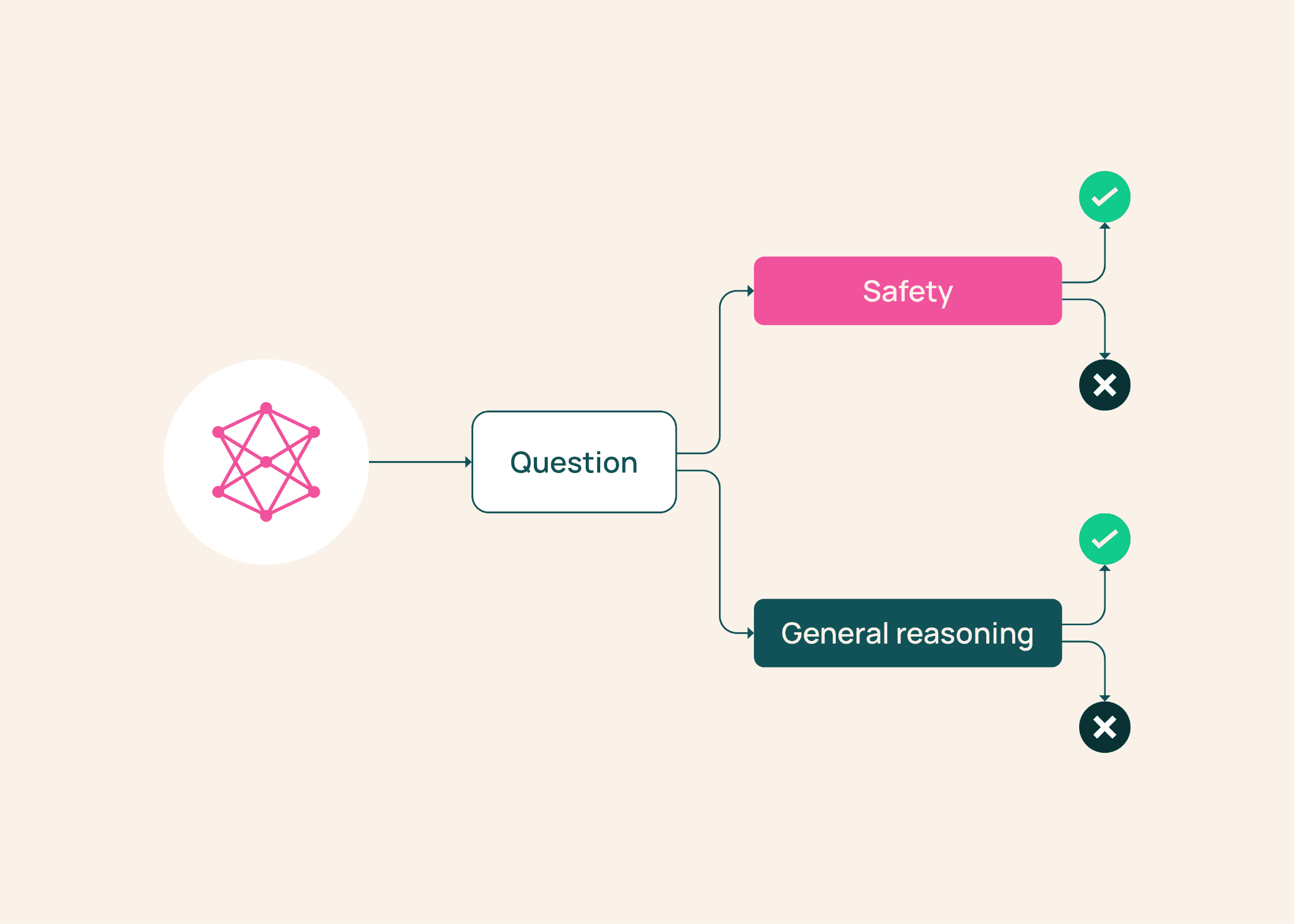
Based on its title, BenchMIRT represents an effort to critically examine the foundations of LLM evaluation. It's likely a framework or a set of analytical techniques designed to:- Identify Latent Factors: Beyond a single score, BenchMIRT would likely investigate what underlying capabilities (e.g., factual knowledge, reasoning ability, linguistic fluency, bias detection) are truly being measured by a given benchmark.
- Assess Benchmark Robustness: How sensitive are benchmark results to small changes in prompts, model architecture, or evaluation methodology?
- Detect Data Leakage: Are models performing well because they truly understand, or because they've seen similar data during training? BenchMIRT could help develop methods to detect and quantify such "leakage."
- Quantify Real-World Relevance: How well do benchmark scores correlate with actual performance in practical applications? This is a crucial bridge between academic evaluation and real-world utility.
- Uncover Biases: BenchMIRT could help reveal biases present within benchmarks themselves, which might unfairly favor certain model architectures or training paradigms.
Why This Deep Dive Matters for AI Practitioners
For anyone working with LLMs – from researchers and developers to freelancers and consultants building AI-powered solutions – understanding the insights from initiatives like BenchMIRT is paramount.For Developers and Researchers:
- Informed Model Development: If you know what a benchmark truly measures, you can better target your model's development efforts. Instead of chasing a score that might be achieved through memorization, you can focus on genuine improvements in reasoning or understanding.
- Designing Better Benchmarks: By understanding the flaws and limitations of existing benchmarks, researchers can design more robust, fair, and comprehensive evaluation suites that push the boundaries of AI research in meaningful ways.
- Fairer Comparisons: When comparing models, a deeper understanding of benchmarks allows for more nuanced and accurate assessments, moving beyond simplistic leaderboard rankings. It helps prevent misleading conclusions drawn from scores that might not reflect real intelligence.
For Freelancers and Businesses Using AI Tools:
- Selecting the Right LLM: Don't just pick the LLM with the highest score on a generic leaderboard. BenchMIRT-like insights help you understand if a benchmark aligns with the specific capabilities you need for your project. For example, a model excelling on a factual recall benchmark might not be the best for creative writing tasks.
- Setting Realistic Expectations: Understanding the limitations of benchmarks helps set realistic expectations for LLM performance in production environments. A model might score high in a controlled test but struggle with the open-ended, messy nature of real user interactions.
- Custom Evaluation Strategies: Armed with a critical perspective, freelancers can develop more tailored evaluation strategies for their specific use cases, combining standard benchmarks with custom tests that reflect their unique requirements. This could involve setting up internal benchmarks or "replay pipelines" for conversational agents, as suggested by other recent research.
- Communicating Value: When explaining why a particular LLM was chosen or how it performs, a nuanced understanding of benchmarks provides a stronger foundation for communicating its true capabilities and limitations to clients.
The Path Forward: Towards More Meaningful Evaluation
The emergence of BenchMIRT signifies a crucial turning point in LLM development. It acknowledges that while benchmarks are essential, their results must be interpreted with caution and a deep understanding of their design. This critical self-assessment is vital for the healthy progression of AI. The goal isn't to discredit existing benchmarks, but to enhance our understanding of them. By asking "What are LLM benchmarks actually measuring?", we can move towards:- Multifaceted Evaluation: Relying on a diverse set of benchmarks that cover different aspects of intelligence, instead of a single metric.
- Dynamic Benchmarking: Creating benchmarks that evolve alongside model capabilities, continuously introducing new challenges that prevent saturation.
- Transparency and Reproducibility: Ensuring that benchmark methodologies are clear, well-documented, and reproducible, allowing for independent verification and analysis.
- Human-in-the-Loop Evaluation: Integrating human judgment more effectively, not just for data labeling, but for qualitative assessment of LLM outputs in complex scenarios.
Frequently Asked Questions
What is the main goal of BenchMIRT?
The primary goal of BenchMIRT is to deeply analyze and understand what existing Large Language Model (LLM) benchmarks are truly measuring, going beyond surface-level scores to uncover the underlying capabilities and potential limitations of these evaluation tools.
Why is it important to question what LLM benchmarks measure?
It's crucial because benchmarks heavily influence LLM development and selection. If benchmarks are flawed, biased, or only measure superficial aspects, they can lead to misleading conclusions about model intelligence, hinder genuine progress, and result in suboptimal model choices for real-world applications.
Who benefits from the insights provided by initiatives like BenchMIRT?
Researchers and developers benefit by gaining a clearer understanding of model performance and by being able to design more effective future benchmarks. Freelancers and businesses using AI tools benefit by making more informed decisions when selecting LLMs, setting realistic expectations, and developing tailored evaluation strategies for their specific needs.
Where can I find more information about BenchMIRT?
The most direct reference to BenchMIRT currently available is its appearance on the Hugging Face blog, titled "BenchMIRT: What are LLM benchmarks actually measuring?", dated September 1, 2026. You can look for this article on the Hugging Face Blog for further details as they become available.