Unlocking Hyper-Efficiency: A Review of the AI-Powered SEO Delivery Engine Concept
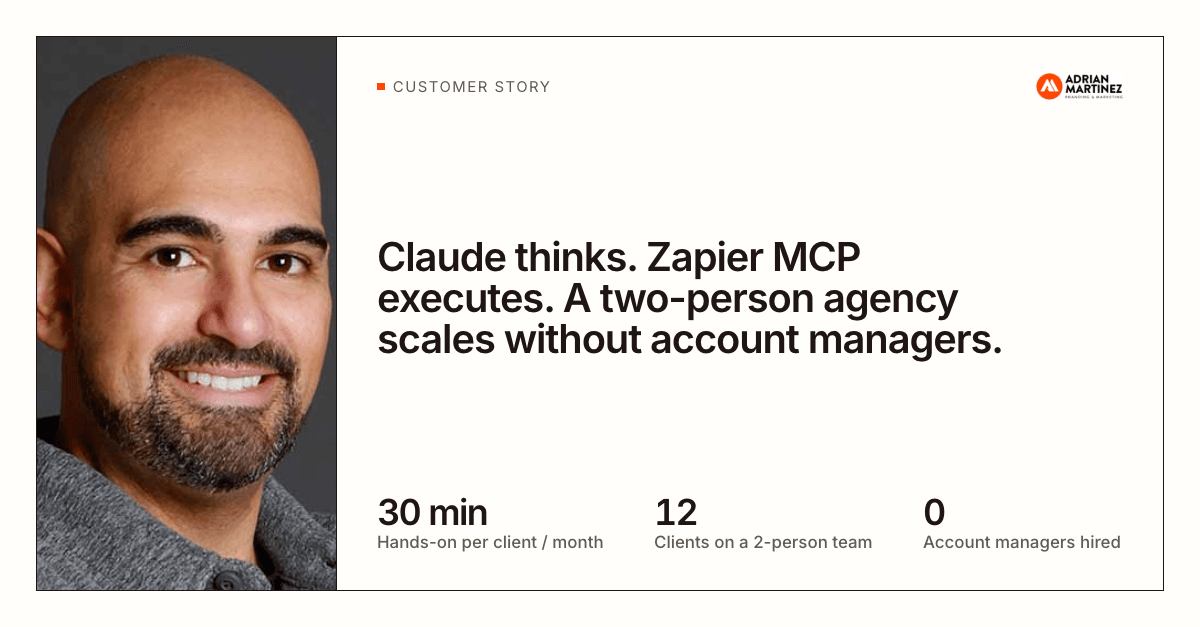
In the fast-paced world of digital marketing, where client demands are high and the need for consistent, quality output is paramount, the idea of scaling an SEO agency without exponentially increasing headcount often feels like a distant dream. Adrian Martinez, who runs a digital marketing agency in Toronto specializing in Website Design, SEO, and Answer Engine Optimization (AEO), faced this exact challenge. With his two-person team handling around twelve clients, each requiring 10 to 15 hours of hands-on work per month—covering research, drafting, technical SEO, and reporting—growth quickly hit a ceiling. Instead of immediately hiring a dozen account managers, Adrian's vision was to build a "delivery engine" powered by AI to maintain high quality while dramatically increasing efficiency.
While Adrian Martinez's specific "engine" appears to be an internal, bespoke solution currently in development or private use for his agency, the concept behind it offers a powerful glimpse into the future of SEO delivery. This review will explore the potential, features, and implications of such an AI-powered SEO delivery engine, analyzing its proposed capabilities and how it could reshape the landscape for freelancers and agencies.
What is This AI-Powered SEO Delivery Engine Concept and What Core Problem Does It Solve?
At its heart, the AI-powered SEO delivery engine is a conceptual framework for an automated system designed to streamline and accelerate the core tasks involved in Search Engine Optimization and Answer Engine Optimization. The fundamental problem it aims to solve is the inherent scalability challenge faced by human-centric service businesses like SEO agencies. Traditional agency growth often means a direct correlation between the number of clients and the number of employees. This leads to increased overheads, management complexities, and a cap on ambition when time and human resources become finite.
Adrian Martinez's scenario perfectly illustrates this: a small team delivering high-quality work but limited by the sheer volume of manual effort required per client. An AI engine, in this context, acts as a force multiplier, taking over repetitive, time-consuming tasks, allowing human experts to focus on strategy, client relationships, and high-level problem-solving. It's about breaking the linear growth model and enabling agencies to serve more clients with the same or even fewer human hours, all while maintaining or improving service quality.
How Would This AI Engine Work? Explaining the Main Workflow
Imagine a sophisticated AI system that integrates various specialized modules, each trained on vast datasets of SEO best practices, content, and technical guidelines. The workflow of such an engine would likely involve several stages:
- Client Onboarding & Data Ingestion: The engine would first ingest client data, including website analytics, current SEO performance, target keywords, competitor analysis, and specific campaign goals. This initial data could be fed manually or through API integrations with tools like Google Analytics, Google Search Console, and various SEO platforms.
- Automated Research & Strategy Generation: Leveraging advanced natural language processing (NLP) and machine learning (ML), the AI would perform in-depth keyword research, audience analysis, and content gap analysis. It could identify trending topics, analyze competitor strategies, and even suggest optimal content structures and target personas. For AEO, it would specifically analyze common user questions and search intent for direct, concise answers.
- Content Generation & Optimization: This is where the "drafting" aspect comes into play. The AI could generate outlines, draft full articles, blog posts, meta descriptions, and ad copy based on the research and strategy. It would optimize this content for target keywords, readability, and user engagement, ensuring it aligns with the brand's tone and style. Human oversight would still be crucial for final review, fact-checking, and adding unique insights.
- Technical SEO Auditing & Remediation: The engine would continuously scan client websites for technical SEO issues such as broken links, crawl errors, site speed problems, schema markup opportunities, and mobile-friendliness. It wouldn't just identify problems but could also generate specific recommendations or even automatically implement minor fixes through integrated CMS access (with appropriate permissions).
- Performance Monitoring & Reporting: The AI would track key performance indicators (KPIs) like organic traffic, keyword rankings, conversion rates, and backlink profiles. It would then compile comprehensive, customizable reports, highlighting successes, identifying areas for improvement, and explaining complex data in an understandable format. This significantly reduces the manual reporting burden.
- Continuous Learning & Adaptation: A truly advanced engine would learn from the performance of its generated content and implemented optimizations. It would adapt its strategies based on real-world results, improving its predictive capabilities and content generation over time, much like a human SEO expert gains experience.
Key Potential Features: Real Agency Use Cases
Based on the problem Adrian Martinez is solving, an AI-powered SEO delivery engine would likely boast a suite of features designed for efficiency and quality. Here are some key potential features and their real-world use cases for freelancers and agencies:
- Automated Content Brief Generation:
- Use Case: An agency receives a new client in the SaaS niche. The AI engine automatically analyzes the client's industry, competitors, and target audience to generate detailed content briefs for blog posts, including target keywords, suggested headings, internal linking opportunities, and desired word count. This saves hours of manual research for content writers.
- AI-Powered Content Drafting & Optimization:
- Use Case: Following a content brief, the AI drafts a first version of a blog post on "The Benefits of Cloud Computing for Small Businesses." It ensures keyword density, readability scores, and includes relevant calls to action. The human writer then refines, adds expert insights, and ensures brand voice, cutting drafting time by 50-70%.
- Real-time Technical SEO Audits & Recommendations:
- Use Case: A client's website experiences a sudden drop in search visibility. The AI engine performs an immediate, deep technical audit, identifying a broken canonical tag across multiple pages. It then suggests the exact code fix or configuration change, allowing the technical SEO specialist to implement it rapidly.
- Dynamic Internal & External Link Building Suggestions:
- Use Case: As new content is published, the AI suggests relevant older articles on the client's site for internal linking, improving site architecture. It also identifies authoritative external sites for potential outreach and backlink opportunities, providing contact information or personalized outreach templates.
- Answer Engine Optimization (AEO) Content Structuring:
- Use Case: For a client selling specialized industrial equipment, the AI identifies common questions users ask about their products ("What is a centrifugal pump used for?"). It then helps structure content to directly answer these questions concisely, increasing the likelihood of appearing in "People Also Ask" sections or Google's AI Overviews.
- Customizable Performance Reporting Dashboards:
- Use Case: At the end of each month, the AI automatically generates a branded client report, summarizing keyword ranking changes, organic traffic trends, and the impact of implemented SEO strategies. It can even add AI-generated insights and future recommendations, saving hours of manual data compilation and analysis.
- Competitor Content & Strategy Analysis:
- Use Case: The engine continuously monitors competitor content strategies, identifying their top-performing keywords, content formats, and backlink sources. This intelligence helps the agency quickly adapt and refine its own client strategies to stay ahead.
Pricing: A Conceptual Look at Potential Tiers
Since Adrian Martinez's "engine" is an internal project designed to scale his specific agency, there are no public pricing tiers or subscription options available. However, if such a powerful AI-powered SEO delivery engine were to be commercialized, its pricing structure would likely reflect the significant value it provides in terms of efficiency and scalability.
Potential pricing models could include:
- Starter/Freelancer Tier: A more affordable option for individual SEO freelancers or very small agencies, offering limited client slots (e.g., 1-5 clients) and core automation features like basic content brief generation and reporting. This might be priced around $99-$299 per month.
- Agency/Pro Tier: Designed for growing agencies like Adrian's, offering an increased number of client slots (e.g., 5-25 clients), more advanced features such as AI content drafting, deeper technical audits, and advanced AEO capabilities. This tier could range from $499-$1,999 per month.
- Enterprise/Custom Tier: For large agencies or in-house marketing teams requiring extensive customization, unlimited client slots, dedicated support, and integrations with proprietary systems. This would likely be a custom-quoted solution, potentially starting from several thousands of dollars per month.
- Usage-Based/Credit System: Some features, particularly content generation or extensive technical audits, might be priced on a credit system, where users purchase credits that deplete with usage, offering flexibility.
It's important to note that these are speculative price points based on the potential value and complexity of such a system.
While individual AI tools exist for specific SEO tasks (e.g., AI writers, technical SEO audit tools, keyword research platforms), the uniqueness of Adrian Martinez's "delivery engine" concept lies in its vision for
holistic, integrated automation across the entire SEO workflow for an agency context.
Many existing AI SEO tools focus on one or two aspects:
- AI Content Generators: Tools like Jasper, Copy.ai, or Writesonic excel at generating text but often lack deep integration with SEO analytics or technical auditing.
- Technical SEO Tools: Platforms like Screaming Frog, Ahrefs, or Semrush offer robust technical audits and keyword research, but their AI content generation capabilities are often supplementary or non-existent.
- Reporting Tools: Data visualization tools can create reports, but they typically require manual data pulling and interpretation.
The "engine" concept, however, aims to be a singular, cohesive platform that orchestrates these functions. Its uniqueness would stem from:
- End-to-End Workflow Automation: Instead of using disparate tools and manually transferring data between them, this engine would manage the entire client lifecycle from research to reporting within one system.
- Agency-Centric Design: Built from the ground up to solve agency-specific scaling problems, it would prioritize features that directly reduce human hours per client, such as automated client reporting and bulk content generation.
- AEO Integration: The explicit focus on Answer Engine Optimization (AEO) alongside traditional SEO positions it to tackle the evolving search landscape, where direct answers and featured snippets are increasingly vital.
- Quality Control at Scale: The goal is not just automation but maintaining "high quality" at scale, suggesting advanced AI models that can adhere to brand guidelines, factual accuracy (with human verification), and sophisticated content strategies.
Who Should Be Excited About This Concept?
This AI-powered SEO delivery engine concept offers immense potential for several groups within the digital marketing sphere:
- Growing SEO Agencies: Agencies currently struggling to scale their client base without proportional hiring would find this concept incredibly appealing. It promises a way to boost client capacity and profitability.
- Digital Marketing Consultants & Freelancers: Solo practitioners or small teams looking to take on more clients without sacrificing personal time or quality would benefit from the efficiency gains. It could allow them to compete with larger agencies.
- Content Marketing Teams: In-house teams responsible for a high volume of content creation and optimization could leverage such an engine to accelerate their workflow, from ideation to drafting and performance tracking.
- Entrepreneurs in the AI Space: Those looking to build the next generation of marketing tools should pay close attention to this integrated approach, as it highlights a significant market need.
Who Might Not Find This Concept Relevant (Yet)?
While the potential is vast, not everyone will immediately find this concept universally applicable:
- Very Small Businesses with DIY SEO: Businesses with limited budgets or those handling their own basic SEO might find such a sophisticated, agency-grade system overkill or too expensive, preferring simpler, more accessible tools.
- Agencies Prioritizing Hyper-Customization: Agencies whose core value proposition is extremely bespoke, human-intensive, and highly creative strategies for a very select clientele might find a heavily automated engine less suitable, as it could dilute their unique approach.
- Those Skeptical of AI Quality: Users who are deeply wary of AI-generated content quality or algorithmic biases might prefer to stick with purely manual processes, at least until AI capabilities and trust evolve further.
Final Verdict: Rating the Potential of the AI-Powered SEO Delivery Engine Concept
Given that Adrian Martinez's engine is an internal project and not a commercial product, this verdict rates the
concept and its
potential impact rather than a fully realized tool.
The vision for an AI-powered SEO delivery engine, as exemplified by Adrian Martinez's ambition, is not just innovative but also a necessary evolution for the digital marketing industry. It directly addresses the most pressing challenge for service-based businesses: scalability without compromising quality. The idea of automating mundane, time-consuming tasks across the entire SEO spectrum – from keyword research and content drafting to technical audits and reporting – is a game-changer. It promises to free up human talent for strategic thinking, creative problem-solving, and building stronger client relationships, leading to more profitable and sustainable growth.
The potential for increased efficiency, consistent output, and data-driven decision-making is immense. While the successful implementation of such an engine requires sophisticated AI, robust integrations, and continuous refinement, the direction is undoubtedly forward-thinking. This concept represents a significant leap towards a future where SEO agencies can truly thrive and expand without being limited by the constraints of manual labor.
Potential Rating: 9/10
This concept earns a high rating for its ambitious scope, its direct attack on a critical industry pain point, and its forward-looking integration of AI across a complex workflow. The only point held back is due to it being a conceptual review, awaiting the full realization and public availability of such a comprehensive solution.