Key Takeaways
- Simulation is crucial for developing physical AI like robots and autonomous vehicles, offering a safe, cost-effective, and scalable training environment.
- Key simulation platforms include NVIDIA Isaac Sim, Gazebo, Unity, and MuJoCo, each offering unique strengths in physics, rendering, and integration.
- Simulators provide benefits like faster iteration, safer testing, and vast data generation, but face challenges like the "reality gap" and high computational demands.
- The future points towards higher fidelity, better sim-to-real transfer, and cloud-based solutions, making AI development more accessible and efficient.
In the exciting world of Artificial Intelligence, a lot of the focus often lands on large language models or image generation. But there's a whole other side of AI that interacts with the real world: physical AI. Think of robots, autonomous cars, drones, and smart factory machines. These systems need to learn and adapt in complex physical environments, and that's where simulation becomes not just helpful, but absolutely essential.
What is Physical AI and Why Does It Need Simulation So Much?
Physical AI refers to AI systems that operate in the physical world, using sensors to perceive their surroundings and actuators to perform actions. Examples include robotic arms assembling products, self-driving cars navigating traffic, or humanoid robots assisting in homes. Unlike purely digital AI, physical AI faces the messiness and unpredictability of reality.
Training these physical AI systems directly in the real world comes with huge hurdles:
- Safety Risks: A learning robot could damage itself, its surroundings, or even injure people during early, unpredictable learning phases. Imagine a self-driving car learning from scratch on public roads – it's a non-starter.
- High Costs: Physical prototypes and real-world testing are expensive. Each failed experiment could mean costly repairs or replacement of hardware.
- Time-Consuming: Gathering enough diverse real-world data for robust training takes an enormous amount of time. Setting up scenarios, resetting experiments, and waiting for events to unfold can be incredibly slow.
- Lack of Reproducibility: Real-world conditions are hard to perfectly replicate. A slight change in lighting, temperature, or an unexpected obstacle can make it difficult to compare different training runs accurately.
- Scalability Issues: You can only have so many physical robots or test vehicles. Scaling up training across hundreds or thousands of instances simultaneously is practically impossible in the real world.
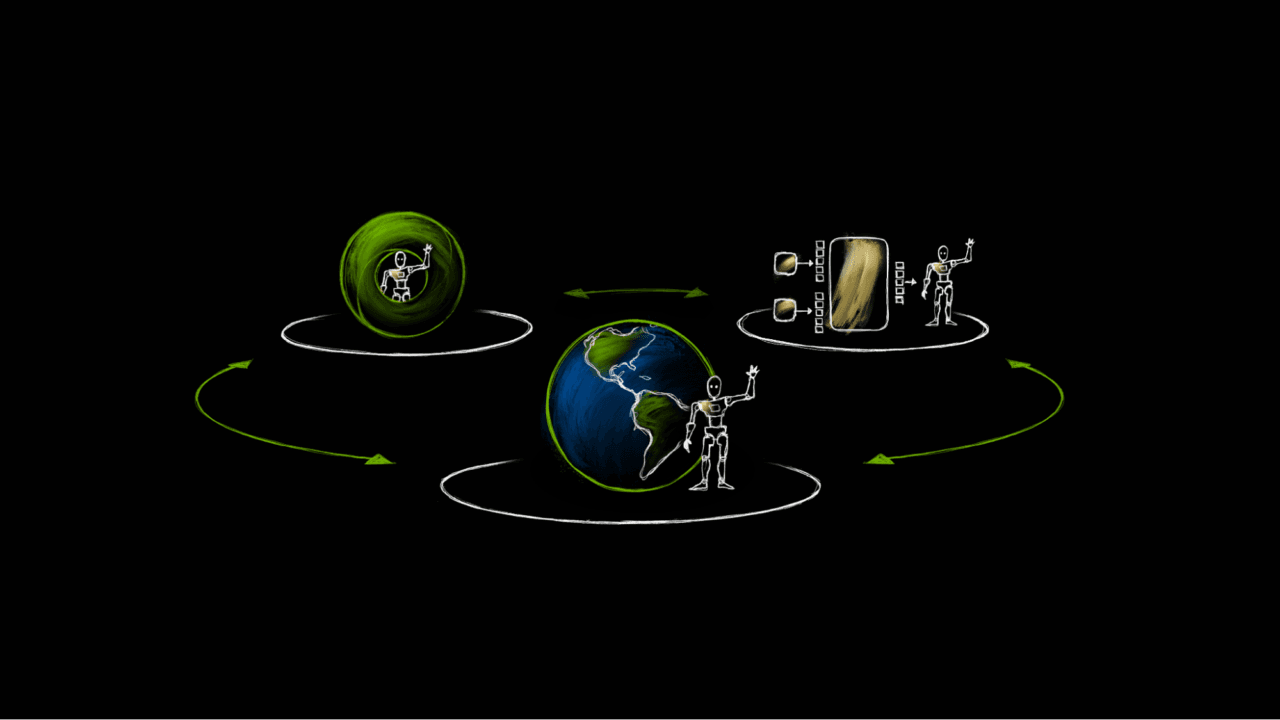
This is precisely why simulation steps in. It offers a digital sandbox where physical AI can learn, fail, and iterate without any of the real-world constraints. It's a virtual laboratory where developers can test algorithms, generate vast amounts of data, and fine-tune behaviors before deploying them to actual hardware.
The Core Ingredients of a Physical AI Simulator
A good physical AI simulator isn't just a fancy video game. It's a sophisticated piece of software designed to mimic reality as closely as possible. Here are its key components:
- Physics Engine: This is the heart of any physical simulator. It accurately calculates how objects interact, including gravity, friction, collisions, and joint movements. This ensures that a robot's movements and interactions with its environment behave realistically. Popular physics engines include NVIDIA PhysX and Bullet Physics.
- Rendering Engine: For AI systems that rely on visual input (like cameras), a realistic rendering engine is critical. It creates lifelike environments, lighting, textures, and object appearances, allowing the AI to "see" a virtual world that closely resembles the real one. Game engines like Unity and Unreal Engine excel here.
- Sensor Models: Physical AI relies on various sensors – cameras, LiDAR, depth sensors, IMUs (Inertial Measurement Units), force sensors, and more. Simulators need to accurately model the data these sensors would produce in a given virtual environment, including noise and limitations.
- Environment Generation & Asset Libraries: To train robust AI, you need diverse environments. Simulators often come with tools to create custom scenes, or offer libraries of 3D assets (objects, terrains, buildings) to populate these worlds.
- Programming Interfaces (APIs): To be useful, simulators need to connect with AI training frameworks (like TensorFlow or PyTorch) and control systems. APIs allow developers to programmatically control robots, apply forces, read sensor data, and reset scenarios.
Key Simulation Platforms Powering Physical AI Development
Several powerful simulation platforms are widely used today for physical AI development, each with its own strengths:
NVIDIA Isaac Sim
NVIDIA has made significant strides with NVIDIA Isaac Sim, built on the NVIDIA Omniverse platform. Isaac Sim is a scalable robotics simulation application designed for developing, testing, and managing AI-based robots. It offers high-fidelity physics simulation (powered by PhysX), photorealistic rendering, and a comprehensive suite of tools for synthetic data generation.
- Key Features: Realistic sensor simulation (including RGB-D cameras, LiDAR, IMU), a large library of 3D assets, multi-robot simulation, and seamless integration with ROS (Robot Operating System) and popular AI frameworks.
- Developer/Company: NVIDIA.
- Use Cases: Training robotic manipulation, autonomous navigation, factory automation, and human-robot interaction. It's particularly strong for generating diverse synthetic data to overcome data scarcity in real-world scenarios.
Gazebo
Gazebo is a popular open-source 3D robotics simulator that allows users to accurately simulate robots in complex indoor and outdoor environments. It's widely used in robotics research and education, largely due to its tight integration with ROS.
- Key Features: Robust physics engine (ODE, Bullet, DART, Simbody), high-quality graphics, a wide range of robot models and environments, and a plugin architecture for custom sensor and actuator models.
- Developer/Company: Developed by Open Robotics (formerly OSRF).
- Use Cases: Prototyping robotic systems, testing navigation algorithms, training reinforcement learning agents for robotics, and educational purposes.
Unity and Unreal Engine for Robotics
While primarily known as game engines, Unity and Unreal Engine have become powerful tools for physical AI simulation due to their advanced rendering capabilities and extensive ecosystems. They offer unparalleled visual fidelity, which is crucial for training vision-based AI. Both engines provide SDKs and tools specifically for robotics and AI development.
- Key Features: State-of-the-art rendering, realistic lighting and shadows, extensive asset stores, C# (Unity) and C++ (Unreal) scripting, and dedicated robotics packages/plugins (e.g., Unity Robotics Hub, Unreal Engine ROS integration).
- Developer/Company: Unity Technologies (Unity), Epic Games (Unreal Engine).
- Use Cases: Generating photorealistic synthetic data for computer vision tasks, simulating complex human-robot interaction scenarios, and developing virtual reality (VR) interfaces for robot control and teleoperation.
MuJoCo
MuJoCo (Multi-Joint dynamics with Contact) is a physics engine designed for research and development in robotics, biomechanics, and graphics. It's known for its speed and accuracy, especially in handling complex contact dynamics, which is vital for robots interacting with surfaces.
- Key Features: Fast and stable simulation of articulated bodies with contacts, C++ API, XML-based model description, and support for various control types.
- Developer/Company: Developed by the University of Washington, acquired by DeepMind in 2021, and made open-source.
- Use Cases: Reinforcement learning for complex locomotion and manipulation tasks, optimal control, and biomechanical simulations where accurate contact physics are paramount.
The Big Benefits of Using Simulation for Physical AI
The advantages of leveraging simulation in physical AI development are clear:
- Cost Reduction: Significantly lowers hardware costs, maintenance, and operational expenses associated with real-world testing.
- Enhanced Safety: Allows for testing dangerous or failure-prone scenarios without risk to equipment or personnel.
- Accelerated Development and Iteration: Speeds up the design, testing, and refinement cycle for AI algorithms and robot control systems. You can run hundreds or thousands of simulations in parallel.
- Scalable Data Generation: Creates vast amounts of diverse synthetic training data, crucial for deep learning models, especially for rare edge cases that are hard to capture in the real world.
- Reproducibility: Offers controlled environments where experiments can be precisely repeated, ensuring reliable comparisons between different algorithm versions.
- Debugging and Analysis: Provides internal access to robot states, sensor readings, and environmental parameters that might be impossible to observe in real hardware, aiding in debugging and understanding AI behavior.
Challenges and What's Next for Physical AI Simulation
Despite its power, simulation isn't a perfect substitute for reality. The biggest hurdle is the "reality gap" or "sim2real gap." This is the discrepancy between how a system behaves in simulation versus how it behaves in the real world. Differences in physics, sensor noise, material properties, and environmental subtleties can cause an AI trained purely in simulation to perform poorly when deployed to a physical robot.
Addressing the reality gap is a major area of research. Techniques like domain randomization (training in simulations with varied parameters to make the AI robust to real-world variations) and sim-to-real transfer learning are critical. Other challenges include the computational cost of high-fidelity simulations and the effort required to create detailed and diverse virtual environments.
The future of physical AI simulation looks bright:
- Higher Fidelity: Continuous improvements in physics engines, rendering, and sensor modeling will narrow the reality gap.
- Better Sim2Real Transfer: Advanced machine learning techniques will make it easier to transfer knowledge from simulation to real robots.
- Cloud-Based Simulation: Services offering scalable, on-demand simulation resources will make high-performance simulation more accessible.
- Integration with Digital Twins: Combining simulations with real-time data from physical systems to create "digital twins" will allow for continuous monitoring, prediction, and optimization of AI in operation.
What This Means for AI Practitioners and Developers
For anyone working with AI, especially in robotics or autonomous systems, understanding and utilizing simulation is no longer optional – it's a core competency. Developers need to be comfortable with:
- Simulation Tools: Proficiency in platforms like Isaac Sim, Gazebo, Unity, or MuJoCo.
- Physics and Robotics Concepts: A solid grasp of kinematics, dynamics, and sensor principles.
- Data Generation and Augmentation: Skills in creating diverse synthetic datasets and using techniques like domain randomization.
- Sim2Real Transfer: Knowledge of methods to bridge the gap between simulated and real-world performance.
Simulation empowers practitioners to rapidly prototype, test, and refine AI solutions, accelerating innovation and making the development of complex physical AI systems more feasible and less risky. As physical AI continues to grow, simulation will remain its indispensable partner, pushing the boundaries of what intelligent machines can achieve in our world.
Frequently Asked Questions
What is the "reality gap" in AI simulation?
The "reality gap," or "sim2real gap," refers to the performance difference an AI system exhibits between a simulated environment and the real world. This gap occurs because simulations, no matter how advanced, cannot perfectly replicate all the complexities, nuances, and unexpected variations of physical reality, leading to a drop in performance when the AI is deployed on actual hardware.
Can simulation completely replace real-world testing for physical AI?
No, simulation cannot completely replace real-world testing. While it is an incredibly powerful tool for early development, rapid iteration, and extensive data generation, final validation and fine-tuning always require testing on physical hardware in real environments. Simulation helps minimize the amount of real-world testing needed, making it safer and more efficient.
Is it expensive to use physical AI simulators?
The cost varies. Open-source simulators like Gazebo and MuJoCo are free to use. Commercial platforms like NVIDIA Isaac Sim or using game engines like Unity and Unreal Engine (which have free tiers but may require licenses for professional use) can involve costs for software, development tools, and significant computational resources, especially for high-fidelity simulations or cloud-based services.
What kind of skills do I need to work with physical AI simulation?
Working with physical AI simulation typically requires a blend of skills. These include programming (Python, C++), a good understanding of robotics and physics principles, familiarity with AI/machine learning frameworks (TensorFlow, PyTorch), and experience with specific simulation platforms and their APIs. Knowledge of 3D modeling and computer graphics can also be very beneficial for environment and asset creation.