Key Takeaways
- MiniMax Agent, now known as Mavis, is an AI agent platform developed by MiniMax, a Chinese AI company founded in early 2022.
- It's designed for complex, long-running tasks, leveraging a multi-agent system (Leader, Worker, Verifier) for planning and execution.
- MiniMax Agent utilizes multimodal foundation models like MiniMax M3, offering capabilities in coding, research, multimedia generation, and more.
- While powerful for intricate workflows, its multi-agent approach might be less efficient for simple tasks due to increased token usage.
Does MiniMax Agent Actually Make Work Easier? A Deep Dive into Mavis
In the fast-evolving world of Artificial Intelligence, the promise of AI agents automating complex tasks has captured the imagination of many. One such player making significant strides is MiniMax, a global AI foundation model company. Their AI agent platform, originally known as MiniMax Agent and now rebranded as Mavis, aims to streamline workflows and enhance productivity for both individuals and enterprises. But does this sophisticated AI truly simplify work, or does it just shift the effort around? Let's take a closer look at MiniMax Agent's architecture, capabilities, and real-world implications.
Who is Behind MiniMax Agent (Mavis)?
MiniMax is an Artificial Intelligence company based in Shanghai, China, founded in early 2022 by several computer vision researchers from SenseTime. Their mission is to "co-create intelligence with everyone," with a long-term goal of achieving Artificial General Intelligence (AGI). The company has independently developed a range of multimodal foundation models, including MiniMax M3, MiniMax H3, Speech 2.6, and Music 3.0, which boast advanced coding capabilities, strong agentic performance, and ultra-long context processing. These models are designed to understand, generate, and integrate various modalities like text, audio, images, video, and music.
MiniMax has quickly grown, serving over 300 million individual users across more than 200 countries and regions, and over 1 million enterprises and developers in more than 100 countries. They went public on the Hong Kong Stock Exchange in January 2026 and are recognized as one of China's "AI Tigers."
What Exactly is MiniMax Agent (Mavis) and Why Does It Matter?
MiniMax Agent, officially upgraded and renamed Mavis in May 2026, is a general-purpose AI agent platform built for tackling complex, long-horizon tasks. It's designed to move beyond simple chat responses, emphasizing planning and execution for workflow automation. Instead of just answering a single prompt, Mavis can break down intricate tasks into multiple steps, reason through their execution, and deliver structured outputs such as summaries, documents, code, or multimedia content.
This matters because traditional AI models often struggle with multi-step tasks that require sustained context, tool use, and dynamic decision-making. Mavis aims to bridge this gap, offering a more autonomous and capable AI assistant that can manage entire projects rather than just isolated queries. Its ability to handle long-running tasks and continuously evolve makes it a significant development for AI practitioners and businesses looking to automate more sophisticated processes.
How Mavis Works: The Architecture Under the Hood
The core of MiniMax Agent's (Mavis') power lies in its sophisticated architecture, particularly its multi-agent system. As of its May 2026 upgrade, Mavis is structured around "Agent Teams" which typically consist of a Leader, a Worker, and a Verifier. This setup allows for parallel multi-agent collaboration, where tasks are split and delegated, mimicking a human team's workflow.
Key Architectural Components:
- LLM (Brain): At its heart, Mavis is powered by MiniMax's proprietary foundation models, such as MiniMax M2.1 and the more recent MiniMax M3. These large language models are responsible for understanding instructions, making decisions, and generating responses. The M3 model, for instance, supports up to a 1M token context window, crucial for long-range agent tasks and complex coding projects.
- Tools: Mavis integrates various tools, enabling it to interact with the external environment and perform specific actions. These can include:
- BashTool: For executing shell commands.
- FileReadTool/FileWriteTool: For managing files.
- SessionNoteTool: Provides persistent memory, allowing the agent to retain key information across multiple sessions.
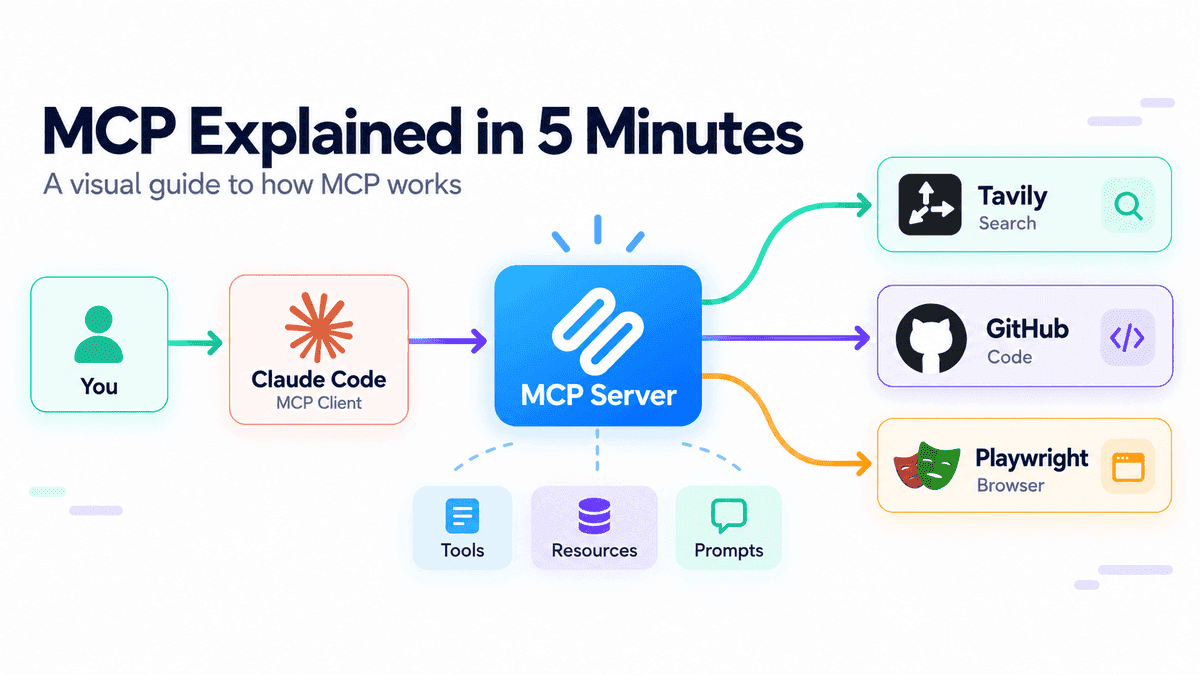
- MCP Tools: MiniMax's Multi-Agent Collaboration Protocol (MCP) allows Mavis to connect to external services like Google Maps, GitHub/GitLab, Slack, Figma, and even custom tools.
- Multimedia Generation: Capabilities for generating images, audio, and video content.
- Built-in Browser: For web browsing, inspecting content, and debugging generated HTML.
- Memory: Beyond short-term context, Mavis features long-term memory to retain history across interactions. It also employs intelligent context management with automatic summarization to handle long conversation scenarios and configurable token limits.
- Agent Execution Loop: Mavis follows a complete agent execution loop: Perception → Thinking → Action → Feedback. This iterative process allows the agent to continuously adapt and refine its approach to a task.
- Self-Refactoring Capabilities: With models like M2.7, Mavis can even run a self-optimization cycle. It can analyze where a task went wrong, plan changes to its own scaffold (skills, memory, workflow rules), apply those changes, evaluate the results, and decide whether to keep or revert them.
The system's autonomy level is described as L3, meaning the "user as a consultant." The agent takes the initiative in task planning and execution over extended periods, with the user primarily providing feedback or incorporating the results.
Real-World Applications and Use Cases
MiniMax Agent (Mavis) is designed to assist with a broad spectrum of tasks, making work easier in several key areas:
- Coding and Software Development: Mavis excels in coding, including writing, fixing, and optimizing code. It can automate multilingual software development, handle complex instructions, and maintain context across multi-step coding tasks. The MiniMax Code desktop app brings together chat, project context, file operations, terminal sessions, and browser previews into one local workspace for developers.
- Deep Research and Analysis: For tasks requiring extensive information gathering, Mavis can perform web searches, analyze documents, and generate structured reports. It can process and understand various document types, extract key information, and create summaries.
- Multimodal Content Generation: Leveraging its multimodal foundation models, Mavis can generate text, images, audio, and even video content. This is useful for creating presentations, marketing materials, or specialized multimedia outputs.
- Workflow Automation: Mavis can manage complex office workflows, such as generating reports, validating data, running scripts, and summarizing results. Its ability to plan multi-step workflows makes it suitable for early automation experiments and routine task automation.
- Specialized Applications: Beyond general productivity, Mavis offers specialized features like personalized meditation audio sessions, detailed trip planning, and real-time translation.
User testimonials and demonstrations highlight its capability to build business foundations, create websites, perform data analysis, and generate comprehensive reports from simple prompts, often in a fraction of the time it would take manually.
Pricing and Subscription Options
MiniMax offers a flexible pricing structure for its API and subscription plans, catering to both individuals and enterprises.
- API Pricing (for enterprises): This is a "Pay as You Go" model, with real-time billing per token or call.
- For models like M2.5, standard pricing is around $0.15 per million input tokens and $1.20 per million output tokens.
- Audio and Video packages are also available as prepaid subscriptions at lower rates.
- Subscription Plans (for individuals and small teams): These offer fixed monthly quotas.
- MiniMax Agent itself offers credit-based subscriptions, including a free tier, a basic plan at $19 USD/month, and a pro plan.
- In May 2026, MiniMax merged its TokenPlan and Agent Plan into one subscription, allowing shared credits across CLI, API, and Agent usage for models like M2.7, music, video, and voice.
- Earlier coding plans for MiniMax M2 were reported to be around $10/month for Starter, $20/month for Pro, and $50/month for Max, though specific usage quotas were not always clearly defined.
It's important for users to monitor their credit usage, as multi-agent collaboration, while powerful, can sometimes lead to higher token consumption for simpler tasks compared to a single model.
Does Mavis Make Work Easier? The Verdict
The central question remains: does MiniMax Agent (Mavis) actually make work easier? The answer is nuanced, but largely positive, especially for complex and long-running tasks. Mavis's multi-agent architecture, combined with its powerful multimodal foundation models and extensive tool integration, allows it to tackle problems that go far beyond what a simple chatbot can achieve.
For developers, researchers, and professionals dealing with multi-step projects, code generation, detailed analysis, or multimedia creation, Mavis can significantly reduce manual effort and accelerate output. Its ability to plan, execute, and even self-optimize workflows represents a genuine step forward in AI-driven productivity.
However, it's also important to note that for very simple tasks, the overhead of a multi-agent system might not always be the most efficient approach in terms of token usage. MiniMax's own engineering insights suggest that the real payoff comes with long, verifiable tasks. Users should carefully evaluate their specific needs to ensure Mavis is the right fit. For those seeking a robust, autonomous AI companion for intricate workflows, Mavis certainly offers a compelling solution to make work easier and more efficient.
Frequently Asked Questions
What is MiniMax Agent now called?
MiniMax Agent was upgraded and rebranded as "Mavis" in May 2026.
Who developed MiniMax Agent?
MiniMax Agent (Mavis) was developed by MiniMax, an AI company based in Shanghai, China, founded in early 2022.
What kinds of tasks can MiniMax Agent (Mavis) handle?
Mavis is designed for complex, long-horizon tasks including coding, deep research, document analysis, multimodal content generation (text, images, audio, video), and general workflow automation. It can break down tasks, plan steps, and execute using various tools.
Is there a free version of MiniMax Agent (Mavis)?
Yes, MiniMax Agent offers a credit-based subscription that includes a free tier, alongside basic and pro paid plans.