Key Takeaways
- AI agents need different types of memory (working, episodic, semantic, procedural) to operate intelligently and persistently across tasks and sessions.
- Memory requirements depend on task complexity, model size, context window length, data volume, and the learning paradigm.
- Effective memory management uses strategies like Retrieval-Augmented Generation (RAG), vector databases, summarization, and quantization to balance performance, cost, and capability.
- New techniques like Memory Sparse Attention are pushing context window limits, enabling agents to handle massive amounts of information.
How Much Memory Does Your AI Agent Actually Need?
In the rapidly evolving world of artificial intelligence, building truly intelligent and adaptive agents is a primary goal. Whether it's a customer service bot, a data analysis assistant, or an autonomous system, an AI agent's effectiveness often comes down to one critical component: its memory. But how much memory does an AI agent actually need? The answer isn't simple, as it depends on what you want your agent to do, how it learns, and the resources you have. Let's take a deep dive into the fascinating world of AI agent memory, exploring its types, why it matters, and how to manage it effectively.
What Exactly is "Memory" for an AI Agent?
When we talk about memory in AI agents, we're not referring to the RAM in your computer. Instead, it's about the system that allows an AI to store, recall, and learn from past interactions and information to improve its decision-making and overall performance. Unlike traditional AI models that process each task independently, agents with memory can retain context, recognize patterns, and adapt over time.
Researchers often categorize AI agent memory into several types, drawing inspiration from human cognitive science. The CoALA framework, formalized in 2023 by Princeton researchers, outlines four key types: in-context (working) memory, episodic memory, semantic memory, and procedural memory.
Short-Term Memory (Context Window)
This is often referred to as "working memory" and represents the immediate, active context an agent is currently reasoning over. Think of it as the scratchpad where the agent keeps track of the current conversation, immediate goals, and intermediate reasoning steps. For large language models (LLMs), this is primarily the "context window" – the maximum number of tokens (words or sub-words) the model can process at once. This memory is temporary and usually clears with each new session or when the buffer fills up.
The size of this context window is a critical factor. For example, as of 2026, models like GPT-4o offer 128,000 tokens, Claude 3.5 Sonnet has 200,000 tokens, and Gemini 1.5 Pro can go up to 2,000,000 tokens for select customers. While bigger context windows might seem better, they come with trade-offs in terms of cost, latency, and potential "attention dilution," where the model might struggle to focus on relevant information within a very long context.
Long-Term Memory (Knowledge Base, Experience Replay)
Long-term memory is designed for persistent storage, allowing agents to retain information across sessions and learn from accumulated knowledge. This is where an agent stores facts, preferences, past decisions, and general world knowledge. It enables cross-session recall and is crucial for personalized and adaptive AI.
- Episodic Memory: Stores records of past events, interactions, and specific experiences. Similar to how humans recall individual events. This is useful for case-based reasoning and understanding user history.
- Semantic Memory: Holds factual knowledge, definitions, and accumulated world knowledge. This includes structured facts, user preferences, and domain-specific information.
- Procedural Memory: Contains skills, rules, and behavioral instructions, often embedded in system prompts or tool definitions. It helps agents automate complex action sequences based on prior experiences.
Working Memory (Internal State, Scratchpad)
Distinct from the context window, working memory, as defined by the CoALA paper, is "the active state holding goals, observations, and recently retrieved knowledge that the agent is currently reasoning over." It's the agent's internal "scratchpad" where it externalizes its reasoning, plans, and intermediate steps. This allows for multi-step reasoning and tool execution, improving coherence and reliability. Tools like ReAct (Yao et al., 2022) are canonical examples of agents using a scratchpad for working memory.
Why Does Agent Memory Matter So Much?
The ability to remember and learn is what transforms a simple AI into an intelligent agent. Without proper memory, AI agents remain reactive and stateless. Here's why memory is so critical:
- Performance and Responsiveness: Agents with optimized memory can quickly recall relevant information, leading to faster and more accurate responses. Without it, agents might re-compute or re-ask for information, slowing down interactions.
- Cost and Resource Management: Every token in an LLM's context window costs money and processing time. Efficient memory management helps control these costs by only bringing in necessary information.
- Capability and Intelligence: Memory enables agents to maintain continuity across tasks, personalize interactions, learn from feedback, and adapt to user preferences. This is essential for complex, goal-oriented applications.
- Scalability: As AI applications grow, managing large volumes of data and interactions becomes challenging. Well-designed memory architectures allow agents to scale without sacrificing coherence or performance.
Factors Influencing Your Agent's Memory Needs
The "right" amount and type of memory for your agent aren't fixed; they depend on several factors:
- Complexity of Task/Environment: Simple reflex agents, like a basic thermostat, might not need long-term memory. However, agents performing multi-step tasks or operating in dynamic environments require extensive memory to plan, adapt, and learn.
- Model Architecture and Size: Larger models inherently require more memory for their parameters. The underlying architecture also dictates how context is handled.
- Context Window Length: While LLMs are getting larger context windows, simply relying on a huge window isn't always efficient. The practical working memory of an agent can be much smaller than its theoretical context window.
- Data Modality and Volume: Agents processing vast amounts of text, images, or other data will naturally need more sophisticated memory systems to store and retrieve this information.
- Learning Paradigm: Reinforcement learning agents, for instance, often use "experience replay buffers" as a form of memory to learn from past actions and outcomes.
- Number of Agents: Multi-agent systems require memory not only for individual agents but also for coordinating shared state and knowledge across agents.
Strategies for Effective Memory Management
Given the constraints and complexities, effective memory management is crucial for building robust AI agents. Here are some key strategies AI practitioners use:
Context Window Optimization
Since the context window is finite and expensive, managing it is key. Techniques include:
- Sliding Windows: Keeping only the most recent interactions in the context, dropping older ones. This is simple but can lead to forgetting older, potentially important information.
- Recursive Summarization: Periodically summarizing older parts of the conversation or task history and injecting the summary into the context. This distills important points, saving tokens.
Retrieval-Augmented Generation (RAG)
RAG is a powerful architecture that addresses the limitations of an LLM's internal knowledge and context window. It involves fetching relevant information from external data sources (like documents, databases, or knowledge bases) and feeding that context into the LLM's prompt before it generates a response. RAG helps agents access up-to-date, domain-specific, and private data, reducing hallucinations and allowing them to ground responses in facts.
Popular open-source frameworks like LangChain and LlamaIndex are widely used for building RAG pipelines and integrating memory into AI agents.
Vector Databases for External Knowledge
Vector databases are specialized databases designed to store and query "vector embeddings" – numerical representations of data (text, images, etc.) that capture their semantic meaning. They act as a long-term memory layer for AI systems. When an agent needs information, it queries the vector database using embeddings, and the database returns semantically similar chunks of data. This is a core component of RAG. Examples include Pinecone, Chroma, Qdrant, Weaviate, FAISS, and PGVector.
While vector databases are excellent for factual grounding and external knowledge, they are distinct from an agent's personalized memory, which needs to store user-specific state and adapt over sessions. Solutions like Mem0 are emerging as open-source memory layers that work with existing vector databases to provide intelligent, context-aware memory for LLMs and AI agents.
Memory Replay Buffers (for Reinforcement Learning)
In reinforcement learning, agents learn by interacting with an environment. Memory replay buffers store past experiences (state, action, reward, next state) which are then randomly sampled to train the agent. This helps stabilize learning and makes efficient use of past data.
Compression and Quantization Techniques
As models grow, their memory footprint becomes a bottleneck. Techniques to reduce this include:
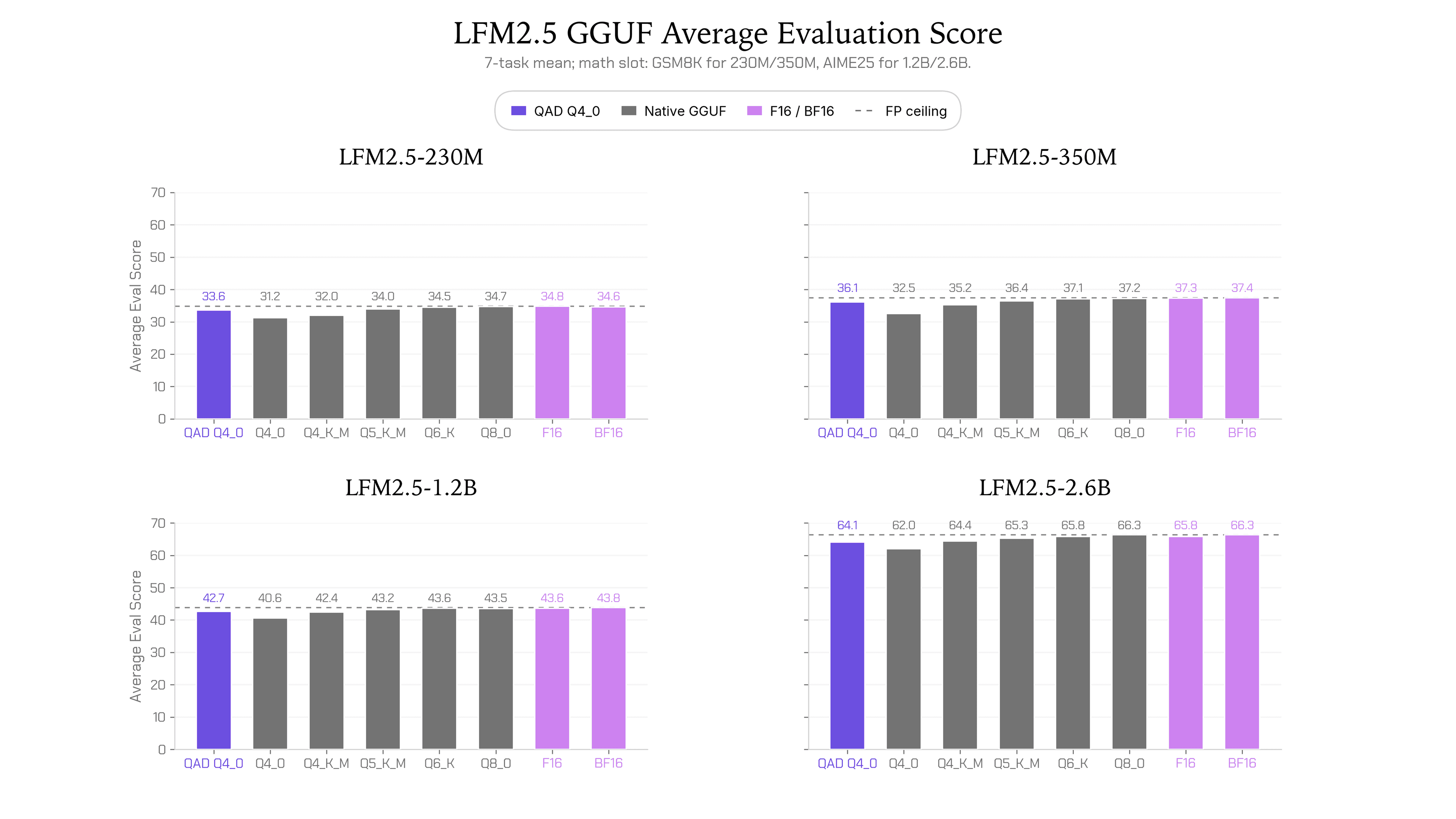
- Quantization: This technique reduces the precision of numerical representations (weights, biases, activations) in a model, often from 32-bit floating-point (FP32) to 16-bit (FP16/BF16) or even 8-bit integers (INT8). This significantly reduces memory usage, computational requirements, and inference speed, allowing models to run on cheaper hardware or embedded devices, though it can sometimes lead to a slight loss in precision.
- Compression and Consolidation: Summarizing or distilling information to store only the most critical parts, especially for long-term memory.
Hierarchical Memory Systems
Combining different memory types into a layered architecture. For example, a fast, small working memory for immediate tasks, coupled with a larger, slower long-term memory for persistent knowledge.
Sparse Attention Mechanisms
Traditional transformer self-attention mechanisms scale quadratically with sequence length, making very long contexts computationally expensive. Sparse attention techniques address this by limiting which prior tokens each query attends to, rather than computing attention over the entire context. This reduces work and memory movement for long sequences. Recent advancements like Memory Sparse Attention (MSA) by researchers at Evermind, Shanda Group, and Peking University aim to extend context windows up to 100 million tokens while maintaining reasoning accuracy. This is achieved by having the model learn to compress massive document collections into precomputed attention values and retrieve only the most relevant chunks.
What This Means for AI Practitioners
For anyone building or working with AI agents, understanding memory requirements is paramount:
- Design Choices: You need to deliberately design your agent's memory architecture based on its use case. A simple chatbot might get by with a sliding window, but a complex autonomous agent will need a sophisticated, multi-layered memory system.
- Balancing Trade-offs: There's always a balance between memory capacity, performance (latency), cost, and accuracy. Larger memory often means higher costs and slower processing, while aggressive compression might impact precision.
- Future Trends: The field is actively researching ways to overcome memory bottlenecks. Innovations in long-context LLMs, advanced RAG, and novel memory architectures like MSA are continuously pushing the boundaries of what AI agents can remember and reason with.
- Governance: As agents become more capable, managing what they remember, for how long, and for what purpose becomes a critical aspect of AI governance, especially concerning privacy and security.
Conclusion
The question of "how much memory does your agent actually need" is deeply intertwined with the ambition and complexity of your AI agent. It's not about a single number but a strategic decision about balancing various types of memory, from the ephemeral context window to persistent knowledge bases. By thoughtfully integrating and optimizing memory systems, developers can move beyond stateless chatbots to create truly intelligent, adaptive, and capable AI agents that can learn, remember, and grow over time.
Frequently Asked Questions
What is the "context window" in an AI agent?
The context window is the maximum amount of information (measured in tokens) that a large language model (LLM) can process at one time in a single request. It acts as the agent's short-term working memory, holding the current conversation, instructions, and intermediate thoughts.
Why can't AI agents just remember everything?
AI agents, especially those based on large language models, cannot inherently remember everything due to architectural limitations (like the quadratic scaling of self-attention with context length) and practical constraints related to computational cost and memory. Storing and processing excessive data leads to slower response times and higher expenses. Therefore, external memory systems and optimization strategies are essential.
What is Retrieval-Augmented Generation (RAG) and how does it help with memory?
Retrieval-Augmented Generation (RAG) is an AI architecture that enhances an LLM's knowledge by retrieving relevant information from external data sources (like documents or databases) and injecting it into the model's context window before generating a response. It helps agents access up-to-date, domain-specific facts, acting as a form of long-term memory for external knowledge, and reduces the likelihood of the LLM "forgetting" or "hallucinating" information.
What are some ways to optimize memory for AI agents?
Key memory optimization strategies include using sliding windows or recursive summarization to manage the context window, implementing Retrieval-Augmented Generation (RAG) with vector databases for long-term knowledge, and applying quantization techniques to reduce model size and computational requirements. Advanced methods like sparse attention mechanisms are also being developed to handle extremely long contexts more efficiently.