Key Takeaways
- "TutorMoments" is an evaluation framework by the Allen Institute for AI (AI2) that assesses an AI tutor's ability to judge the optimal timing and level of instructional intervention, moving beyond just correctness.
- Effective AI tutors utilize advanced techniques like student modeling, knowledge tracing, and adaptive intervention strategies to understand a learner's state and provide timely, appropriate help.
- The goal is to balance providing support with fostering student independence, often through Socratic questioning and graduated hints rather than direct answers.
- Reinforcement Learning (RL) is increasingly used to train AI tutors to optimize pedagogical strategies, learning when to intervene for improved long-term outcomes.
TutorMoments: The Art of Knowing When AI Tutors Should Help and When to Hold Back
In the rapidly evolving landscape of AI in education, the conversation around intelligent tutoring systems (ITS) is getting more nuanced. It's no longer just about whether an AI can provide a correct answer or explain a concept. The critical question now being asked, and indeed the focus of the "TutorMoments" initiative, is far more subtle: do AI tutors truly know when to help and, crucially, when to hold back? This question dives deep into the pedagogical intelligence of AI, exploring its ability to mimic the delicate balance a human tutor strikes between guidance and allowing a student to grapple with a problem independently. This deep dive into adaptive AI tutoring is for tech-savvy readers, educators, and AI practitioners keen to understand the intricate mechanisms that allow AI to become a truly effective learning partner.Understanding the "TutorMoments" Challenge
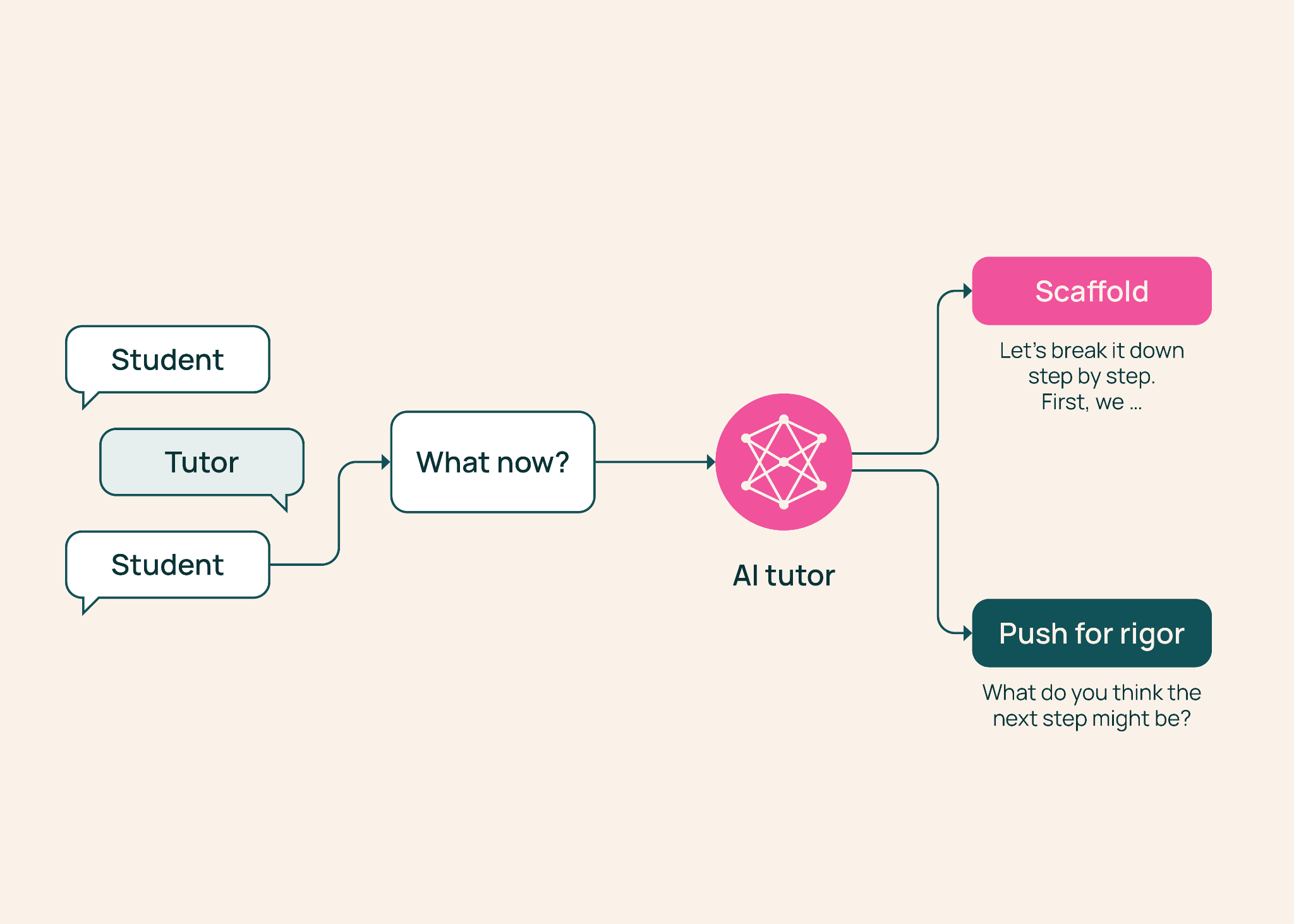
The feed item's title, "TutorMoments: Do AI tutors know when to help and when to hold back?", points to a fundamental challenge in educational AI. The Allen Institute for AI (AI2) introduced "TutorMoments" as an evaluation effort to shift the focus from merely assessing an AI tutor's correctness to its ability to make timely and appropriate pedagogical judgments. This involves recognizing when a student needs a hint, when they are genuinely stuck, when they are on the right track but might benefit from probing questions, and when the AI should simply remain silent to allow for independent thought and problem-solving. This isn't just a technical hurdle; it's a pedagogical one. A human tutor intuitively understands that too much help can hinder a student's development of critical thinking and problem-solving skills, while too little help can lead to frustration and disengagement. The ideal "tutor moment" involves providing just enough support to keep a student moving forward without giving away the solution, fostering a sense of accomplishment and deeper understanding.The Science Behind Smart AI Tutoring
So, how are AI tutors being designed to navigate this complex balance? The intelligence of these systems stems from several interconnected AI methodologies. Intelligent Tutoring Systems (ITS) have been a subject of active research for over half a century, integrating AI techniques to deliver tailored instruction.Student Modeling: The AI's Understanding of You
At the core of any adaptive AI tutor is a robust "student model." This component is designed to track a learner's progress, identify their strengths, weaknesses, misconceptions, and even their cognitive and motivational states. Think of it as the AI building a continuous, updated profile of what each learner has mastered and where they still need support. By capturing data about student responses, an ITS can model a student's knowledge, metacognition, motivation, or emotion, and adapt instruction to individual needs.Knowledge Tracing: Predicting Mastery
A key technique within student modeling is "knowledge tracing." Formalized by Albert Corbett and John Anderson in 1995 at Carnegie Mellon, knowledge tracing estimates a learner's hidden mastery of a skill from the answers they provide over time. Instead of relying on a single score, it maintains a running probability that a learner has acquired a particular skill, updating this belief with every new question and response. This allows the AI to differentiate between a lucky guess and genuine understanding, or a careless mistake versus a fundamental misconception. Modern approaches to knowledge tracing leverage advanced machine learning, including deep learning and neural networks (Deep Knowledge Tracing, Self-Attentive Knowledge Tracing), to capture the sequential nature of learning and predict future performance with high accuracy.Adaptive Intervention Strategies: The Art of Giving Hints
Once an AI tutor has a clear picture of a student's knowledge state, it needs to decide on the best intervention strategy. This involves a spectrum of actions:- Graduated Hints: Offering small, structured questions or nudges that guide the student toward the answer without directly providing it. This Socratic approach encourages learners to discover the answer themselves.
- Targeted Explanations: Providing specific explanations or examples when a clear knowledge gap is identified.
- Scaffolding: Adjusting the difficulty and complexity of problems, offering more detailed guidance initially and gradually reducing support as the student gains competence.
- Practice Problems: Selecting new problems tailored to reinforce skills that haven't been mastered.
- Socratic Questioning: Posing questions that lead students to identify their own mistakes and build deeper understanding, rather than just telling them the answer.
Reinforcement Learning (RL) and Pedagogical Policies
A significant advancement in enabling AI tutors to make these complex intervention decisions comes from Reinforcement Learning (RL). RL allows the AI to learn optimal teaching strategies through continuous trial-and-error optimization. By simulating interactions and receiving feedback on its pedagogical choices (e.g., did the student understand better? Did they solve the problem independently later?), the AI can refine its "pedagogical policy"—the rules it uses to decide what to do next. This dynamic adjustment ensures that the AI tutor's interventions are not static but continuously improve based on real-time student performance and long-term learning outcomes.Natural Language Processing (NLP) and Generative AI
For AI tutors to interact naturally and provide context-aware help, Natural Language Processing (NLP) is crucial. It enables the AI to understand student questions, interpret their responses, and generate human-like explanations and feedback. With the rise of generative AI and large language models (LLMs), AI tutors can now generate naturalistic dialogue, provide explanations tailored to individual student questions, and offer sophisticated feedback on open-ended responses. This allows for more interactive and personalized conversations, moving beyond pre-scripted responses.Current Landscape of AI Tutors and Their Capabilities
Intelligent tutoring systems have been used to teach diverse domains like language, mathematics, medicine, and programming for over 40 years. Companies like Carnegie Learning, for instance, have developed "Cognitive Tutors" for high school mathematics based on cognitive theories, using "model tracing" and "knowledge tracing" to monitor student learning and provide feedback. Other platforms like Khan Academy's "Khanmigo" also exemplify AI tutors that offer personalized lessons, instant feedback, and 24/7 accessibility. These systems are designed to:- Adapt to Individual Needs: Adjusting pace, difficulty, and focus based on a student's strengths and weaknesses.
- Provide Immediate Feedback: Giving instant corrections and explanations, which research suggests can significantly reduce learning time.
- Offer 24/7 Accessibility: Making learning flexible and available anytime, anywhere.
- Track Progress: Continuously analyzing performance data to identify knowledge gaps with precision.
The "Human Touch" vs. AI: Bridging the Gap
While AI tutors offer incredible advantages in scalability and data-driven personalization, the "TutorMoments" challenge highlights what is still a complex area: replicating the nuanced judgment of a human tutor. Human tutors use contextual cues like hesitation, confusion, and body language to decide when to intervene. While AI is advancing in processing such cues, the ethical implications of monitoring student behavior and privacy boundaries around learning process data are important considerations. Effective integration often combines AI capabilities with essential human teaching elements like emotional connection, guidance for complex problem-solving, and critical thinking development. AI tutors are seen as amplifying what educators can do, handling routine practice and assessment, and freeing up human teachers for deeper discussions and relationship-building.Implications for Learners and Educators
For learners, AI tutors mean more personalized, accessible, and engaging educational experiences. They can learn at their own pace, receive immediate, judgment-free feedback, and get targeted support for their specific needs. This can lead to faster mastery and higher retention rates. For educators and content creators, AI tutoring opens new possibilities for delivering adaptive learning experiences at scale. It provides unprecedented visibility into individual student progress, allowing for more targeted human interventions when truly needed.The Road Ahead
The "TutorMoments" initiative underscores the ongoing commitment to making AI tutors not just smart, but truly pedagogically sound. Future developments will likely focus on:- More Sophisticated Student Modeling: Incorporating a wider range of psychological and emotional states to better understand learner engagement and motivation.
- Improved Pedagogical Policies: Further refining RL algorithms to create more adaptive and interpretable tutoring strategies.
- Ethical AI: Addressing concerns around data privacy, algorithmic transparency, and bias to ensure equitable and responsible deployment of AI in education.
- Seamless Human-AI Collaboration: Developing systems that empower both students and teachers, enhancing rather than undermining the educational experience.
Frequently Asked Questions
What is TutorMoments?
TutorMoments is an evaluation framework developed by the Allen Institute for AI (AI2). Its purpose is to assess an AI tutor's ability to make appropriate pedagogical judgments, specifically focusing on the timing and nature of its interventions—knowing when to offer help and when to allow a student to work independently.
How do AI tutors know when to intervene?
AI tutors use several advanced techniques, including student modeling to track a learner's knowledge and progress, and knowledge tracing to predict their mastery of specific skills. They also employ adaptive intervention strategies, often powered by reinforcement learning, to learn optimal pedagogical policies for providing graduated hints, Socratic questioning, or targeted explanations at the right moment.
Can AI tutors replace human teachers?
Currently, AI tutors are designed to complement and enhance human teaching, not replace it. While they excel at providing personalized practice, immediate feedback, and adaptive content at scale, human teachers bring essential elements like emotional connection, complex problem-solving guidance, and critical thinking development that AI cannot fully replicate.
What are the benefits of AI tutoring for students?
Students benefit from AI tutoring through personalized learning paths that adapt to their individual needs and pace, immediate feedback that helps them correct mistakes quickly, and 24/7 accessibility. This can lead to faster learning, improved retention, and increased motivation.