Key Takeaways
- Mastering Large Language Models (LLMs) goes beyond basic usage, requiring a deep understanding of their architecture, training, fine-tuning, and deployment.
- Books offer a structured, in-depth learning path crucial for AI practitioners looking to build and customize LLM-powered applications.
- The recommended books cover everything from the foundational Transformer architecture to practical Python-based development, fine-tuning, and production deployment strategies.
- These resources are essential for software developers and AI engineers aiming to move beyond theoretical knowledge into real-world LLM implementation.
Large Language Models (LLMs) have quickly become a cornerstone of modern artificial intelligence, transforming how we interact with technology and process information. From powering advanced chatbots to automating complex tasks, LLMs are everywhere. But moving past simply using them to truly understanding, building, fine-tuning, and deploying these powerful models requires more than just skimming online articles.
For software developers, AI engineers, and tech enthusiasts eager to move beyond the surface and truly grasp the mechanics of LLMs, a structured learning approach is key. This is where well-crafted books come in. They offer the depth, context, and practical examples needed to turn theoretical knowledge into hands-on capability.
What Are Large Language Models (LLMs) and Why Do They Matter?
At their core, Large Language Models are sophisticated neural networks trained on vast amounts of text data. They learn to understand, generate, and process human language with remarkable fluency and coherence. The "large" in LLM refers to their massive scale, encompassing billions or even trillions of parameters, which allows them to capture intricate patterns and nuances in language.
Why do they matter so much? LLMs are driving innovation across countless industries. They enable more natural human-computer interaction, automate content creation, enhance data analysis, and even assist in coding. For developers, understanding LLMs means unlocking the ability to build next-generation applications, create intelligent agents, and solve complex problems that were once considered intractable.
The Journey to LLM Mastery: Why Books Are Essential
While quick tutorials and online courses are great for getting started, mastering LLMs—especially when it comes to building, fine-tuning, and deploying them—demands a deeper dive. Books provide a comprehensive, curated learning experience that often includes:
- Foundational Concepts: A thorough explanation of the underlying theory, from neural networks to the Transformer architecture.
- Practical Implementations: Step-by-step guidance, code examples, and best practices for developing LLM applications.
- Fine-tuning Techniques: Detailed methods for adapting pre-trained models to specific tasks and datasets.
- Deployment Strategies: Insights into taking models from development to production environments, considering scalability and efficiency.
- Problem-Solving Approaches: Real-world scenarios and solutions for common challenges in LLM development.
For a developer, this structured knowledge is invaluable. It equips you not just with how to use a tool, but how to understand its inner workings, customize it, and deploy it effectively in diverse contexts.
Deep Dive: 5 Books to Elevate Your LLM Knowledge
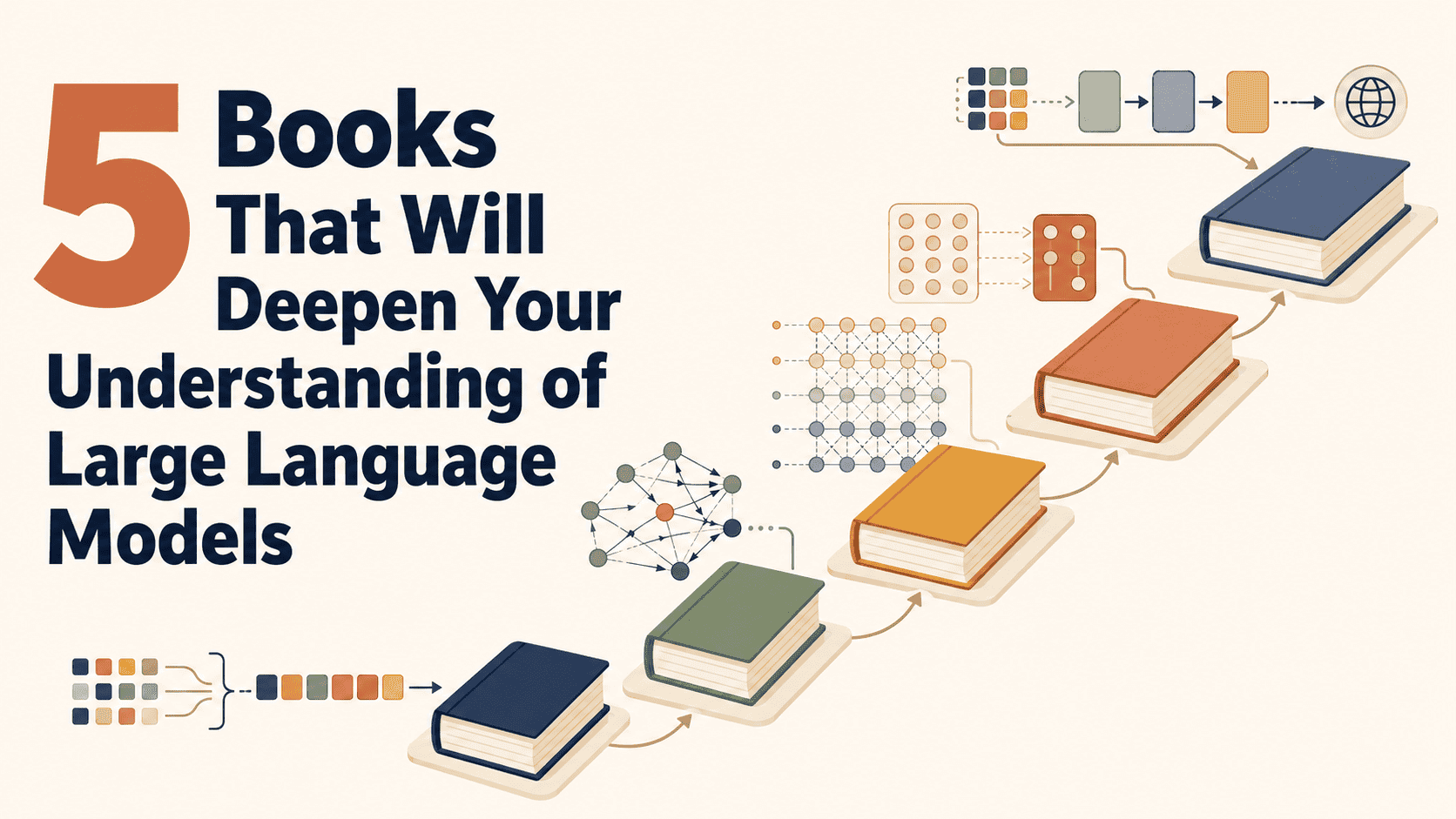
We've hand-picked five excellent books that will significantly deepen your understanding of Large Language Models, focusing on the practical aspects of building, fine-tuning, and deploying them. These resources are perfect for software developers and AI practitioners looking to level up their skills.
1. Natural Language Processing with Transformers
- Authors: Lewis Tunstall, Leandro von Werra, Thomas Wolf
- Publisher: O'Reilly Media
- Release Date: September 2022
This book is a must-read for anyone serious about working with modern LLMs, especially within the Hugging Face ecosystem. Lewis Tunstall, Leandro von Werra, and Thomas Wolf — who are deeply involved with Hugging Face — provide an authoritative guide to the Transformers library.
It starts by demystifying the Transformer architecture, the backbone of most large language models today. You'll learn how to pretrain, fine-tune, and deploy models for various NLP tasks. The book covers practical aspects like using the Hugging Face Datasets and Tokenizers libraries, which are crucial for preparing data and processing text efficiently. It's packed with code examples and real-world applications, making it incredibly practical for developers looking to implement and customize LLMs. If you plan to fine-tune models or leverage the vast array of pre-trained models available, this book is your go-to resource. You can find more details and purchase it on the O'Reilly website.
2. Hands-On Large Language Models with Python
- Author: Ben Auffarth
- Publisher: Packt Publishing
- Release Date: December 2023
Ben Auffarth's "Hands-On Large Language Models with Python" is designed for developers who want to get their hands dirty with LLMs using Python. Released in late 2023, this book is quite current and focuses on practical implementation.
The book guides you through building LLM applications from scratch. It covers essential topics like prompt engineering, which is key to effectively interacting with LLMs, and Retrieval Augmented Generation (RAG) techniques for grounding models with external knowledge. Crucially, it dives into fine-tuning strategies to adapt general-purpose LLMs to specific domains or tasks. Developers will appreciate the focus on deployment, helping them understand how to take their LLM prototypes to production. If you're looking for a practical, code-heavy approach to building and deploying LLM applications with Python, this book is an excellent choice. Check it out on the Packt Publishing website.
3. Generative AI with Python: From Foundation Models to Production Deployments
- Authors: Shashank Gupta, Rajat Gupta, Tanmay Singh
- Publisher: Apress (Springer Nature)
- Release Date: December 2023
While broader than just LLMs, this book by Shashank Gupta, Rajat Gupta, and Tanmay Singh offers a comprehensive look at Generative AI, with significant emphasis on large language models. Its strength lies in its full-lifecycle approach, taking readers from foundational concepts all the way to production deployment.
The book meticulously covers building, training, fine-tuning, and ultimately deploying generative AI models, including LLMs. It's particularly valuable for understanding the ecosystem around generative AI and how to integrate these powerful models into real-world applications. Developers will find practical Python examples and insights into MLOps practices relevant for productionizing LLMs. If your goal is to understand the complete pipeline of building and deploying generative AI solutions, with a strong focus on LLMs, this book provides a robust framework. You can learn more about it on the Springer Nature (Apress) site.
4. Grokking Large Language Models
- Author: Mario Mueller
- Publisher: Manning Publications
- Release Date: January 2024
Mario Mueller's "Grokking Large Language Models" aims to demystify the inner workings of LLMs, making complex concepts accessible. The "Grokking" series is known for its ability to break down intricate technical topics, and this book continues that tradition for LLMs.
It's an excellent resource for understanding the core mechanics, architecture (especially the Transformer), and the training process behind LLMs. While it might not be a direct "code-along build an LLM" book, a deep understanding of how these models function internally is crucial for effective fine-tuning, debugging, and deployment. The book covers topics like attention mechanisms, tokenization, and various architectures, providing the foundational knowledge necessary for any developer who wants to truly build and customize LLM-powered systems. Get a deeper insight into the book on the Manning Publications website.
5. Foundations of Large Language Models
- Authors: Martin Gerlach, Jacek Czerniak, Philipp Schmidt, Piotr Grudzien, Michal Staniak
- Publisher: Packt Publishing
- Release Date: May 2024
"Foundations of Large Language Models" by Martin Gerlach and his co-authors provides a comprehensive overview of both the theoretical and practical aspects of LLMs. As its name suggests, it lays a solid groundwork for understanding this rapidly evolving field.
This book covers the essential architectures, training paradigms, and evaluation metrics crucial for anyone involved in developing or deploying LLMs. It also delves into practical application development, offering a balanced perspective between the academic underpinnings and real-world utility. For developers, this means gaining a holistic view of LLMs, from their theoretical origins to their implementation challenges. It's a great resource for consolidating your knowledge and ensuring you have a strong conceptual framework before diving into more specialized topics. Find more details on the Packt Publishing website.
Beyond the Books: Practical Application and Continuous Learning
Reading these books will undoubtedly equip you with a robust understanding of LLMs. However, the field of AI is dynamic, with new models, techniques, and tools emerging constantly. To truly master LLM development, combine your reading with practical experience:
- Experiment with Code: Implement concepts from the books using open-source libraries like Hugging Face Transformers, PyTorch, or TensorFlow.
- Participate in Projects: Work on personal projects, contribute to open-source LLM initiatives, or join hackathons.
- Stay Updated: Follow reputable AI research blogs, attend webinars, and engage with the LLM community on platforms like GitHub and arXiv.
- Fine-tune Your Own Models: Download pre-trained models and experiment with fine-tuning them on custom datasets for specific tasks.
- Explore Deployment: Try deploying a small LLM or an LLM-powered application using cloud services (AWS, Azure, GCP) or local frameworks.
The synergy between theoretical knowledge from books and hands-on practice is what truly builds expertise in this complex and exciting domain.
Conclusion
Large Language Models are not just a passing trend; they are a fundamental shift in how we approach artificial intelligence. For software developers and AI practitioners, gaining a deep, actionable understanding of how to build, fine-tune, and deploy these models is becoming an indispensable skill. The five books listed here provide an excellent, structured path to achieving that mastery. By investing your time in these resources, you'll be well-prepared to innovate and lead in the evolving landscape of AI-powered applications.
Frequently Asked Questions
What is the best starting point for someone new to LLMs but experienced in Python?
For Python-experienced developers new to LLMs, "Hands-On Large Language Models with Python" by Ben Auffarth is an excellent starting point. It provides practical, code-focused guidance on building and deploying LLM applications from scratch.
Do these books cover the latest LLM architectures like GPT-4 or Llama?
While the foundational Transformer architecture is thoroughly covered, specific details on proprietary models like GPT-4 are generally not included in books due to their closed-source nature and rapid evolution. However, books like "Natural Language Processing with Transformers" and "Foundations of Large Language Models" provide the core knowledge needed to understand how such models work and how to interact with similar open-source alternatives.
Are these books suitable for beginners in deep learning?
Some of these books, particularly "Grokking Large Language Models" and "Foundations of Large Language Models," aim to build foundational understanding from the ground up, making them accessible even if you're relatively new to deep learning. However, a basic understanding of Python programming and machine learning concepts will greatly enhance your learning experience with all of them.
Can I fine-tune LLMs on my own computer using the techniques in these books?
The ability to fine-tune LLMs on your own computer depends on the size of the model and your hardware. For smaller models and specific tasks, yes, many techniques discussed in books like "Natural Language Processing with Transformers" can be applied locally. For larger, more complex fine-tuning tasks, cloud-based GPU resources are often recommended due to computational demands.