Key Takeaways
- Multi-agent AI systems, while powerful, can quickly rack up significant token costs due to complex interactions and extensive context.
- Effective token saving goes beyond simple prompt adjustments; it requires architectural changes like smart context management, agent specialization, and dynamic model selection.
- Implementing strategies like Retrieval-Augmented Generation (RAG), conversation summarization, and model routing can drastically reduce costs and improve performance.
- Popular frameworks like LangChain, AutoGen, and CrewAI offer features and patterns to help developers implement these token-saving techniques.
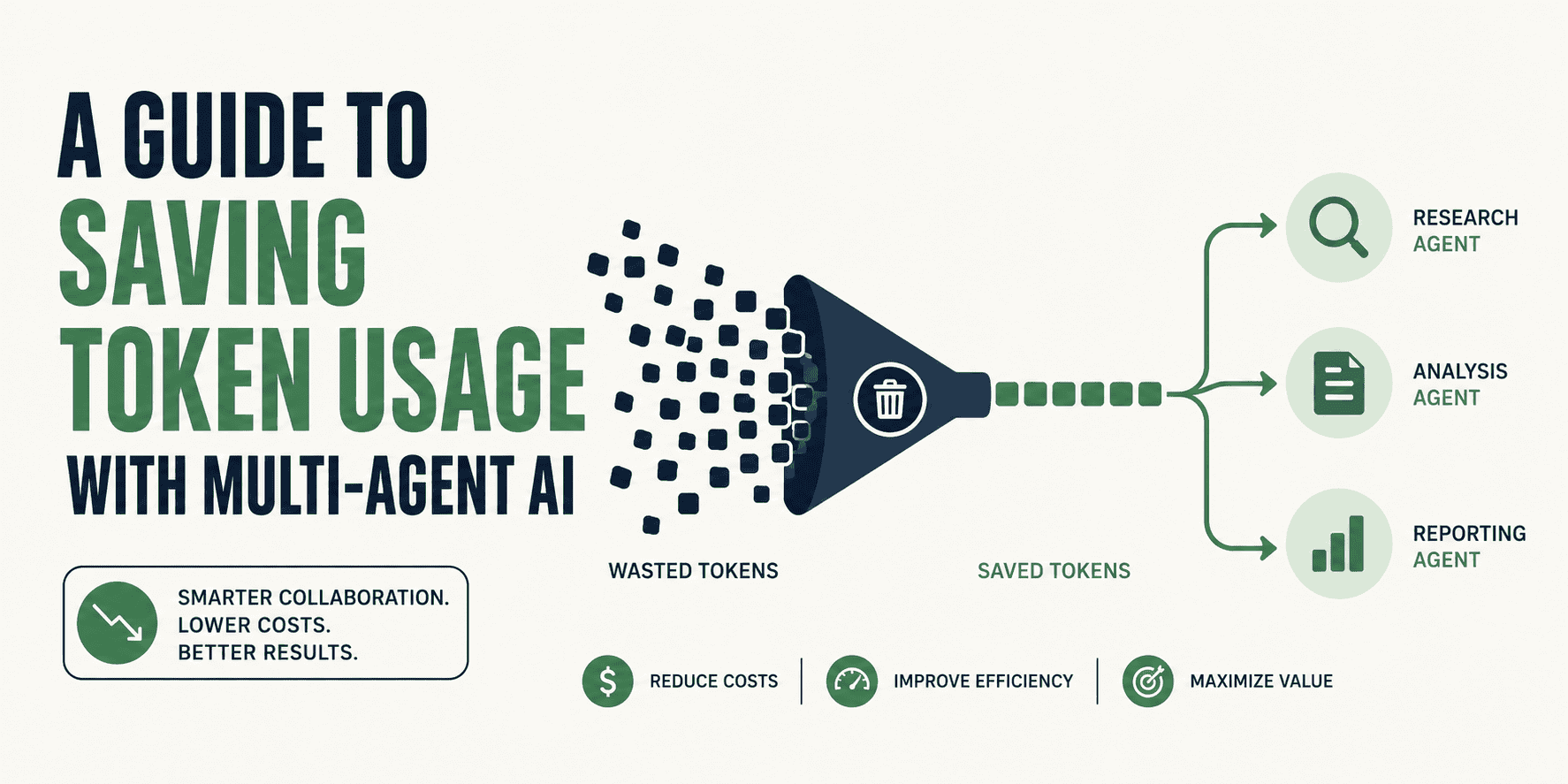
A Developer's Guide to Saving Token Usage with Multi-Agent AI
Multi-agent AI systems are quickly becoming the go-to architecture for tackling complex problems that a single AI model can't handle alone. Imagine a team of specialized AI bots collaborating: one researches, another drafts, a third reviews, and a fourth refines. This collaborative approach opens up incredible possibilities, from automating intricate business workflows to powering advanced research. However, this power comes with a significant challenge: managing token usage and the associated costs.
As AI agents communicate, share context, and execute tasks, the volume of "tokens" processed by Large Language Models (LLMs) can skyrocket. Everything from system instructions and tool definitions to memory logs and conversation history adds up. This isn't just about money; excessive token usage also leads to slower execution times and can even degrade the quality of responses if the model is overloaded with irrelevant information.
The good news? Scaling up a multi-agent architecture doesn't mean your costs have to scale equally. By understanding and implementing a few key strategies, developers can significantly optimize token usage, making their AI systems more efficient and affordable. This guide will walk you through four practical strategies to help you cut down token costs in your multi-agent AI applications, complete with real-world context and conceptual examples.
What is Multi-Agent AI and Why Tokens Matter?
At its core, a multi-agent AI system involves multiple AI entities, or "agents," working together to achieve a common goal. Each agent typically has a defined role, a set of tools it can use, and the ability to communicate and coordinate with other agents. This distributed intelligence allows for more robust, flexible, and capable AI solutions than a single, monolithic model. Frameworks like LangChain (launched in October 2022 by Harrison Chase), AutoGen (Microsoft Research's open-source framework), and CrewAI (an open-source project by João Moura, released in November 2023) provide the building blocks for creating these sophisticated systems.
So, what exactly are tokens? In the world of LLMs, a token is the smallest unit of text that the model processes. It can be a whole word, a subword, or even a single character or a piece of punctuation. For instance, the word "unhappiness" might be broken down into tokens like ["un", "##happi", "##ness"]. LLMs consume and generate text in these token units, and providers like OpenAI, Anthropic, and Google charge based on the number of tokens processed. This means every token directly impacts your operational costs.
The challenge intensifies in multi-agent systems because every interaction, every piece of context passed between agents, and every tool call contributes to the total token count. Studies show that multi-agent systems can use up to 4 to 15 times more tokens than simple chat interactions, making token management a critical concern for developers.
The Cost of Conversation: Understanding Token Usage
To effectively manage costs, you need to understand how LLM providers calculate token usage. Most commercial LLM providers, including OpenAI, Anthropic, and Google, use a pay-as-you-go model where you're charged per token. It's important to note a few key aspects:
- Input vs. Output Tokens: There's often a significant price difference between input tokens (what you send to the model) and output tokens (what the model generates). Output tokens are typically 3 to 10 times more expensive than input tokens.
- Model-Specific Tokenization: Different LLM models and providers can tokenize the exact same text differently, leading to varying token counts for the same input. Always check the specific model's documentation for precise tokenization rules.
- Context Window Limits: Each model has a maximum context window, meaning the total number of tokens it can process in a single request (input + output). Exceeding this limit will result in errors or truncated responses.
To estimate token counts before making an API call, tools like OpenAI's tiktoken library can be invaluable. This Python library allows you to programmatically count tokens for a given text and model, helping you forecast costs and adjust your prompts proactively.
Four Strategies to Slash Your Multi-Agent AI Token Costs
Now, let's dive into practical strategies to optimize token usage in your multi-agent systems.
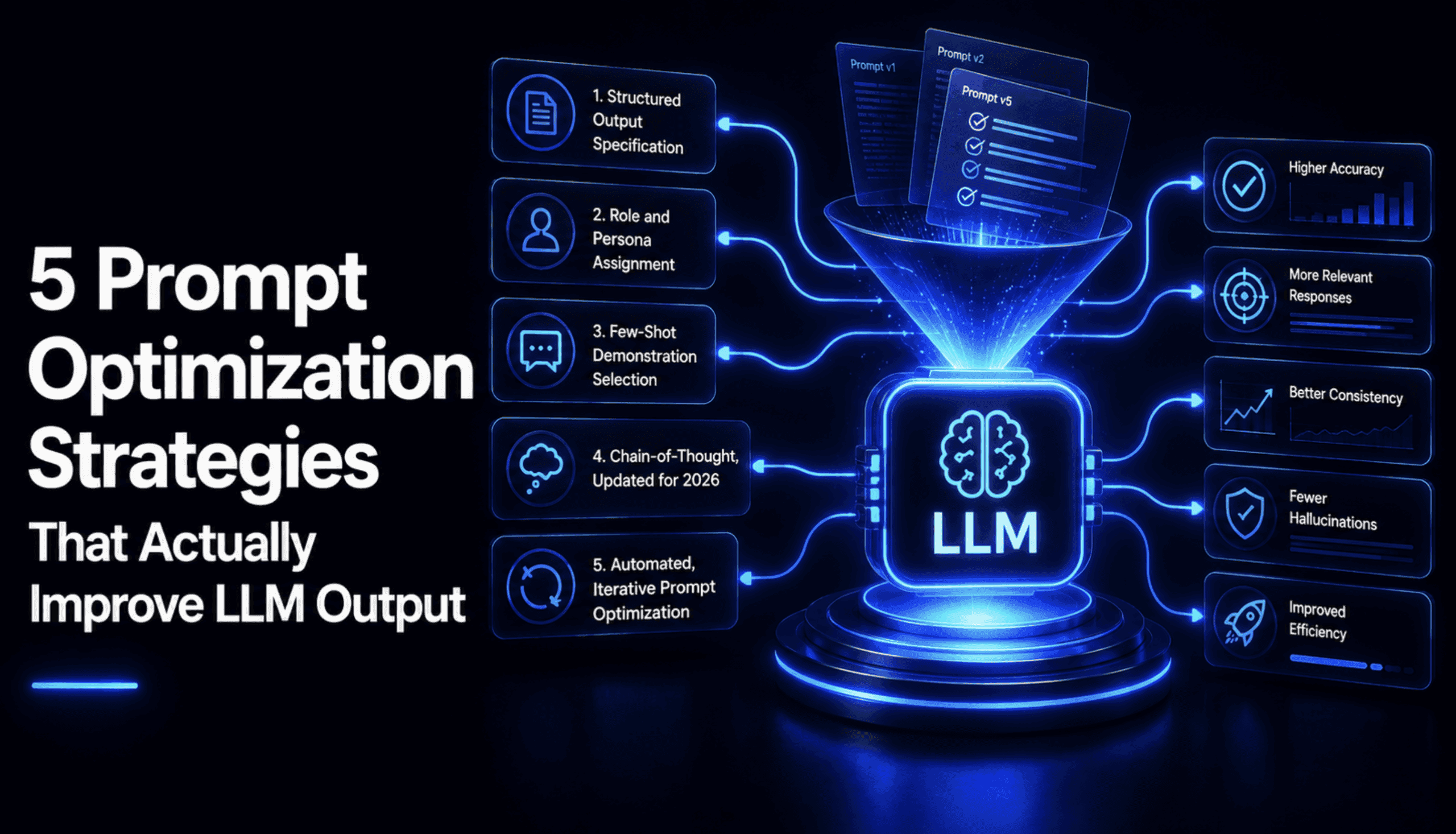
1. Smart Prompt Engineering and Compression
Many developers' first instinct is to simply shorten prompts. While that helps, true prompt optimization goes much deeper. It's about making your prompts precise, structured, and efficient, ensuring the model receives only the necessary information to generate a high-quality response.
-
Clear and Specific Instructions: Ambiguous or verbose instructions force the model to infer, often leading to longer, token-heavy responses. Be direct and explicit about what you want.
Example: Instead of "Could you please summarize the following document, making sure to hit all the important points and keep it somewhat brief?", try "Summarize the following document in exactly three sentences, highlighting key findings."
- Limit Examples: In few-shot prompting, provide only the most essential examples to illustrate the task. Too many examples consume valuable tokens without necessarily improving performance.
-
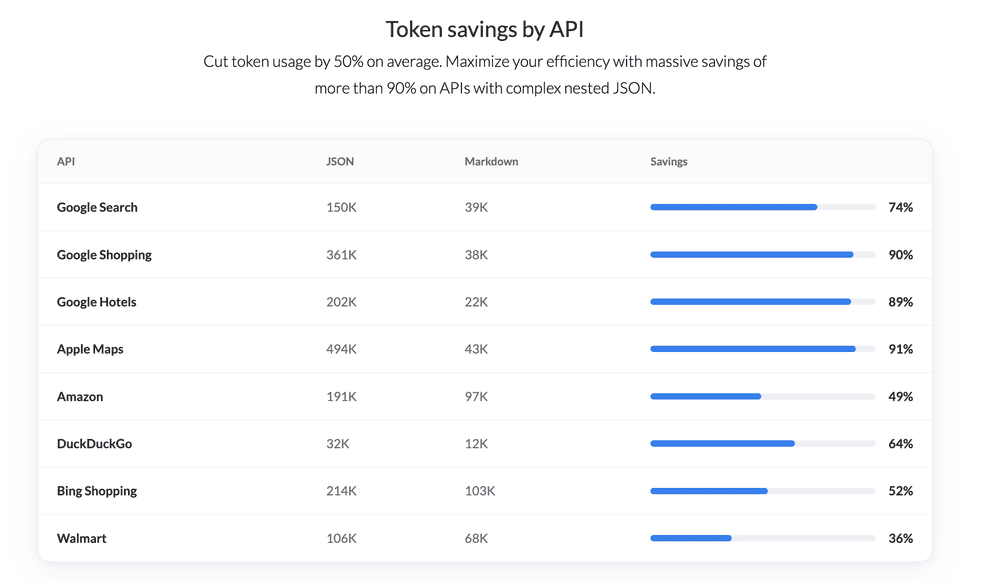
Utilize Output Formatting: Guide the model to produce structured outputs like JSON, XML, or Markdown. This not only makes parsing easier for your agents but can also reduce token usage compared to free-form text. Markdown, for instance, can use significantly fewer tokens than JSON or YAML for similar data.
# Conceptual Python snippet for a structured prompt
system_prompt = """
You are a customer support classifier.
Your task is to classify incoming support tickets and extract key entities.
Respond ONLY with a valid JSON object.
"""

user_prompt = """
Classify this ticket: "My order 48291 arrived damaged and I want a refund."
Expected JSON format: { "category": "refund_request", "priority": "medium", "order_id": "string", "reason": "string" }
"""
This example explicitly tells the agent to return JSON, guiding its output and preventing unnecessary conversational filler.
- Remove Filler Words: Research suggests that omitting polite phrases like "please" or "thank you" in production prompts can reduce token counts without impacting quality.
- Automated Prompt Compression: Tools like Microsoft Research's LLMLingua use smaller models to compress prompts by removing low-information tokens, achieving up to 20x compression with minimal quality loss. This is a more advanced technique but can yield substantial savings.
2. Efficient Context Management with RAG and Summarization
Multi-agent systems often require access to vast amounts of information or lengthy conversation histories. Sending all of this context to the LLM every time is a surefire way to inflate token costs. Efficient context management ensures that agents receive only the most relevant information at any given moment.
-
Retrieval-Augmented Generation (RAG): RAG is a powerful pattern where you store your knowledge base externally (e.g., in a vector database like Milvus or Weaviate) and retrieve only the most relevant "chunks" of information based on the current query. These retrieved chunks are then passed to the LLM as context. This dramatically reduces the input token count compared to trying to stuff an entire document into the prompt. RAG also helps prevent hallucinations by grounding the LLM in external, factual data.
# Conceptual Python snippet for RAG
from langchain.chains import RetrievalQA
from langchain.vectorstores import FAISS
from langchain.embeddings import OpenAIEmbeddings
from langchain.llms import OpenAI

# Assume vector_store is already populated with document embeddings
# vector_store = FAISS.from_documents(texts, OpenAIEmbeddings())

# Create a retrieval chain
qa_chain = RetrievalQA.from_chain_type(
    llm=OpenAI(),
    chain_type="stuff", # Or "map_reduce", "refine" for longer documents
    retriever=vector_store.as_retriever(search_kwargs={"k": 3}) # Retrieve top 3 relevant chunks
)

query = "What are the benefits of multi-agent AI?"
response = qa_chain.run(query)
print(response)
In this LangChain example, `vector_store.as_retriever(search_kwargs={"k": 3})` ensures only the top 3 most relevant document chunks are sent to the LLM, rather than the entire database.
- Chunking Techniques: When working with long documents, split them into smaller, manageable chunks. Text splitters (like LangChain's `RecursiveCharacterTextSplitter`) can divide text at natural boundaries (paragraphs, sentences) and even allow for overlapping segments to maintain context across chunks.
-
Conversation History Trimming and Summarization: For conversational agents, sending the entire chat history in every turn quickly becomes expensive. Instead, implement strategies to:
- Trim History: Keep only the most recent 'N' turns of a conversation. LangChain's `ConversationBufferWindowMemory` is designed for this.
- Summarize Past Interactions: Periodically summarize older parts of the conversation and inject the summary as context instead of the raw messages. This maintains continuity with fewer tokens.
- Token Budgeting: Implement a hard token ceiling for the memory context. If retrieved results or conversation history exceed this budget, prioritize the most critical information and append a note to the model indicating that some context was omitted. This decouples prompt token cost from the size of your memory store.
3. Agent Specialization and Hierarchical Orchestration
In multi-agent systems, not all tasks have the same complexity or require the same processing power. Designing agents with specialized roles and orchestrating their interactions efficiently can lead to significant token savings.
- Routing Layer: Implement a "routing layer" or "triage center" at the start of your workflow. This layer analyzes incoming tasks based on their nature and complexity and then routes them to the most appropriate agent or model.
- Task Decomposition: Break down complex problems into smaller, more manageable sub-tasks. Assign specialized agents to handle each sub-task. For example, one agent might be responsible for data extraction, another for summarization, and a third for final synthesis. This prevents a single, powerful (and expensive) agent from doing all the work.
-
Orchestrator-Sub-Agent Pattern: A common and highly effective pattern is to use a "frontier orchestrator" (a more capable, potentially more expensive model) to plan the overall workflow and delegate tasks to "cheaper sub-agents" (smaller, less expensive models) for execution. This pattern can cut costs by 40-60% without significant quality loss.
# Conceptual Python snippet for agent orchestration def orchestrate_task(user_query): # Use a powerful LLM for initial planning (orchestrator) plan = llm_high_cost.generate_plan(user_query) results = [] for sub_task in plan.sub_tasks: if sub_task.type == "summarization": # Route simple tasks to a cheaper model/agent result = summarizer_agent.execute(sub_task.data) elif sub_task.type == "data_extraction": # Route to another specialized agent result = extractor_agent.execute(sub_task.data) # ... other specialized agents results.append(result) # Use orchestrator again for final synthesis final_output = llm_high_cost.synthesize_results(results, user_query) return final_output - Streamline Inter-Agent Communication: Agents can sometimes be overly verbose in their communication, leading to unnecessary token consumption. Design communication protocols to be concise and focused, passing only essential information between agents.
4. Dynamic Model Selection and Caching
Not every task requires the most advanced and expensive LLM. By dynamically selecting the right model for the job and caching frequently used information, you can achieve substantial cost savings.
-
Dynamic Model Selection ("Model Sliding"): Implement a system that automatically switches between different LLMs based on the complexity and nature of the task.
- Lightweight Models for Simple Tasks: Use smaller, faster, and cheaper models (e.g., GPT-4o Mini, Claude Haiku, Gemini Flash) for tasks like data formatting, intent classification, simple summarization, or routing decisions.
- Powerful Models for Complex Tasks: Reserve larger, more capable, and more expensive models (e.g., GPT-4, Claude Opus, Gemini Pro) for tasks requiring deep reasoning, complex problem-solving, or multi-step orchestration.
# Conceptual Python snippet for dynamic model selection def get_llm_for_task(task_type, complexity_score): if task_type == "classification" and complexity_score < 3: return "gemini-flash-1.5" # Cheaper, faster model elif task_type == "summarization" and complexity_score < 5: return "gpt-4o-mini" # Mid-tier option elif complexity_score >= 5 or task_type == "deep_reasoning": return "claude-opus-4.8" # Most capable, higher cost else: return "gpt-4o" # Default balanced model # In your agent's logic: # task_type, complexity_score = analyze_incoming_request(request) # llm_to_use = get_llm_for_task(task_type, complexity_score) # response = call_llm(llm_to_use, prompt) - Prompt Caching: Many LLM providers offer server-side prompt caching. This means if your agents frequently reuse identical system prompts, tool definitions, or parts of conversation history, these static portions can be stored and recalled at a fraction of the normal input token cost. OpenAI, Anthropic, and Google all offer significant savings (up to 90%) on cached reads. Enable this feature whenever possible for repeated context.
- Semantic Caching: Beyond exact matches, semantic caching stores and retrieves responses for semantically similar queries. If an agent asks a question that has been asked before in a slightly different way, the cached response can be retrieved, saving an LLM call. This requires an embedding model and a vector store for similarity search.
Putting It All Together: A Holistic Approach
Optimizing token usage in multi-agent AI is not about applying a single trick; it's about adopting a holistic approach that combines several strategies tailored to your specific workflow. As many experts suggest, it's more of an "architecture problem disguised as a prompting problem." Focusing solely on trimming prompt wording will yield only marginal savings. The real gains come from structural decisions: how context flows between agents, how much history each step carries, and how many loops run before a task completes.
Continuously monitor your token usage. Tools and frameworks often provide callbacks or logging mechanisms (e.g., LangChain's `get_openai_callback` or `token_usage` metadata) that allow you to track tokens per call and identify bottlenecks. By analyzing where your tokens are actually going, you can make informed decisions about which optimization strategies will provide the most impact. This iterative process of measurement, optimization, and refinement is key to building cost-effective and high-performing multi-agent AI systems.
Frequently Asked Questions
What are tokens in AI and why are they important for cost?
Tokens are the fundamental units of text that Large Language Models (LLMs) process, often representing subwords, words, or characters. AI providers charge based on the number of tokens sent to and received from their models. Therefore, managing token usage directly impacts the operational cost of your AI applications, especially in multi-agent systems where interactions can quickly accumulate tokens.
Why do multi-agent AI systems typically use more tokens than single-agent applications?
Multi-agent systems involve multiple AI entities collaborating, which means more communication, context sharing, tool calls, and intermediate reasoning steps. Each of these interactions adds to the total token count. Unlike a single chat where context might be simpler, multi-agent workflows often require agents to maintain extensive memory, process large documents, and engage in complex dialogues, leading to significantly higher token consumption, sometimes 4 to 15 times more than single-agent interactions.
Can I really save money on token usage without sacrificing the quality of my AI's output?
Yes, absolutely. The goal of token optimization is to achieve the same or even better quality output with fewer tokens. Strategies like smart prompt engineering (being precise, using structured formats), efficient context management (Retrieval-Augmented Generation, summarization), agent specialization (routing tasks to appropriate agents), and dynamic model selection (using smaller models for simpler tasks) focus on providing the LLM with only the most relevant and concise information. This often leads to improved performance (reduced latency, better recall) while simultaneously cutting costs.
Which AI frameworks support these token-saving strategies?
Popular multi-agent AI frameworks are actively developing features to support token optimization. LangChain provides tools for context management (e.g., text splitters, memory modules), RAG implementation, and callbacks for token tracking. AutoGen, while focused on conversational agents, benefits from external context management and model routing. CrewAI, designed for orchestrating agent teams, also leverages these architectural patterns for efficient task execution. Additionally, many LLM providers offer built-in features like prompt caching that can be utilized regardless of the framework.