Key Takeaways
- DataTalks.Club offers five free, hands-on Zoomcamps covering Data Engineering, Machine Learning, MLOps, LLMs, and AI Development Tools.
- These programs bridge the gap between theoretical knowledge and practical, production-grade skills using industry-standard tools.
- Participants engage in community-driven learning with practical lessons, homework, peer-reviewed projects, and optional certificates.
- The Zoomcamps are ideal for anyone looking to upskill in AI and data, from beginners to experienced professionals.
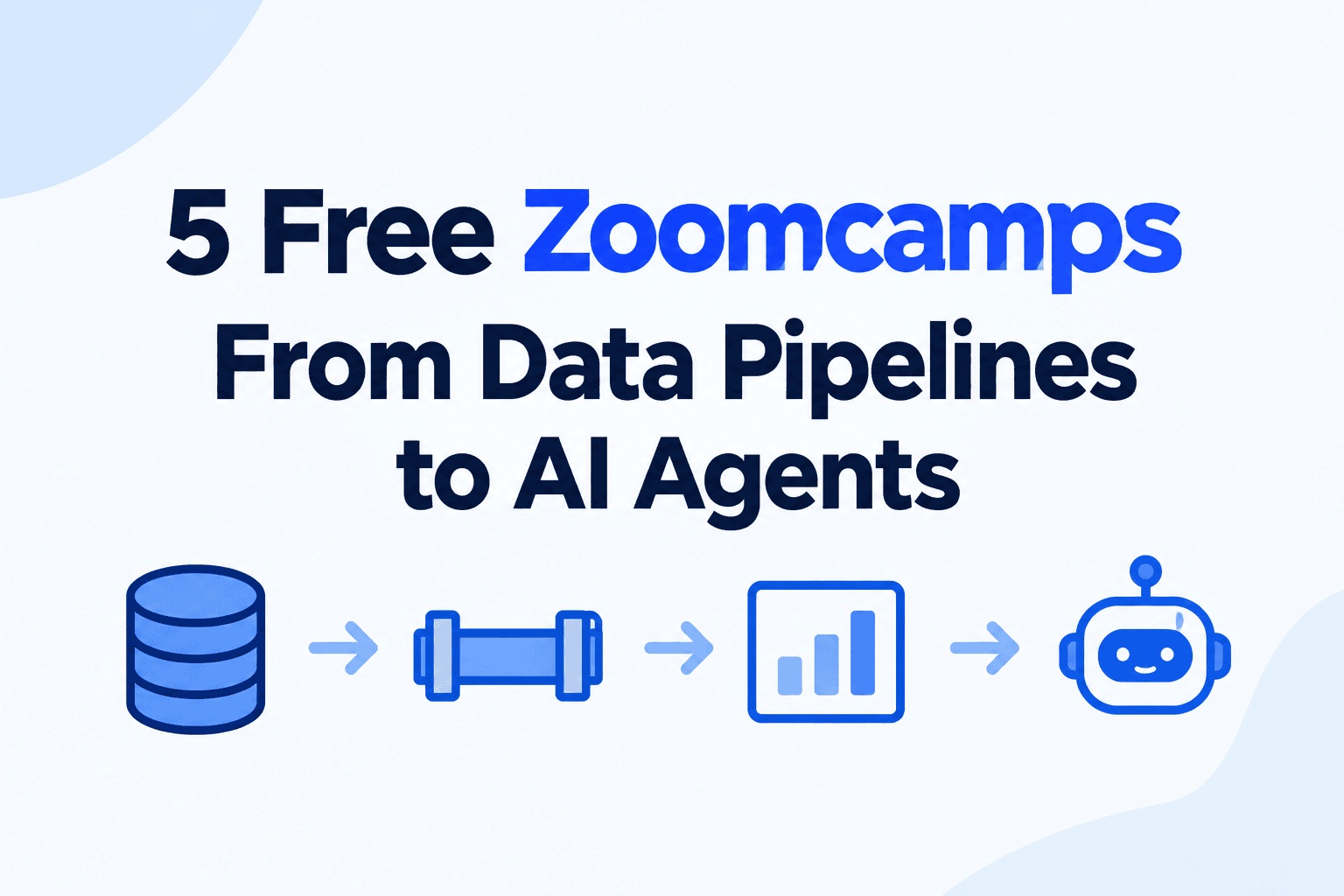
In the fast-evolving world of Artificial Intelligence and data, staying current with the latest tools and techniques is a constant challenge. For many, formal education or expensive bootcamps can be a barrier. This is where community-driven initiatives shine, offering accessible pathways to critical skills. DataTalks.Club, a global community for data science and AI professionals, has carved out a unique space with its "Zoomcamps" – a series of free, intensive, hands-on workshops designed to equip learners with practical, production-ready skills.
The latest buzz revolves around five specific Zoomcamps that take participants on a journey from foundational data pipelines all the way to advanced AI agents. These programs are not just about watching videos; they're about active learning, building real projects, and becoming part of a supportive network. Let's take a deep dive into what these Zoomcamps are, why they matter, and how they empower AI practitioners and tech freelancers.
What Are DataTalks.Club Zoomcamps?
DataTalks.Club Zoomcamps are free, community-driven online courses focused on various aspects of data science, machine learning, and AI engineering. Developed and maintained by the DataTalks.Club community, founded by Alexey Grigorev, these camps aim to bridge the gap between academic knowledge and the practical skills needed in real-world production environments.
Unlike many online tutorials that might stop at theoretical concepts, Zoomcamps emphasize a "project-first" approach. This means you learn by doing, working with the same tools and processes that industry professionals use every day to build and deploy complex systems. The materials are openly available on GitHub, and participants can join live cohorts with weekly deadlines and peer-reviewed projects, or learn at their own pace.
Why These Zoomcamps Matter for AI Practitioners
In today's tech landscape, the ability to not just understand but also implement complex AI and data solutions is highly valued. These Zoomcamps address several critical needs for AI practitioners and freelancers:
- Practical Skill Development: They provide hands-on experience with industry-standard tools and workflows, preparing learners for real-world job requirements.
- Career Advancement and Upskilling: For those looking to switch careers into data or AI, or for experienced professionals aiming to expand their skill sets, these camps offer structured learning paths.
- Community Support: Learning alongside a global community of thousands of learners provides invaluable peer support, networking opportunities, and a platform for public learning and feedback.
- Free and Accessible Education: High-quality tech education can be expensive. DataTalks.Club's commitment to free, comprehensive courses makes advanced topics accessible to a wider audience.
- Portfolio Building: Each Zoomcamp typically culminates in a portfolio-ready project, allowing learners to showcase tangible skills to potential employers or clients.
The Five Essential Zoomcamps: A Deep Dive
Let's explore the five specific Zoomcamps that cover the spectrum from data pipelines to AI agents, offering a comprehensive pathway for modern AI and data professionals.
1. Data Engineering Zoomcamp: Building Robust Data Pipelines
The Data Engineering Zoomcamp is a free, intensive course designed to take participants from foundational data engineering concepts to building production-grade data pipelines. It typically runs for about 9-10 weeks, covering seven modules plus a final project.
What you learn: This camp covers essential tools and technologies like Docker for containerization, Terraform for infrastructure as code, BigQuery for data warehousing, dbt (data build tool) for analytics engineering, Apache Spark for batch processing, and Apache Kafka for stream processing. The curriculum focuses on building robust, scalable data infrastructure from scratch.
Why it matters: Data engineering is the backbone of any data-driven or AI system. Understanding how to collect, store, process, and transform large volumes of data reliably is crucial for feeding machine learning models and ensuring data quality. This camp is ideal for beginners and career switchers aiming for junior data engineer roles, or experienced professionals looking to refresh their knowledge.
2. Machine Learning Zoomcamp: From Models to Deployment
The Machine Learning (ML) Zoomcamp is a free course focused on machine learning engineering, teaching you how to build and deploy ML models in production environments. This course bridges the gap between training models in notebooks and running them in real-world applications.
What you learn: Participants work with industry-standard tools like Scikit-Learn, TensorFlow, and PyTorch. The curriculum covers core ML concepts such as feature engineering, linear regression, binary classification, and model evaluation. A significant focus is placed on model deployment using tools like FastAPI for serving models, Docker for packaging, and exploring serverless options like AWS Lambda and container orchestration with Kubernetes.
Why it matters: Knowing how to train a model is one thing; getting it to work reliably in a live application is another. This Zoomcamp equips learners with the engineering skills needed to take ML projects from experimentation to a deployed, operational state, which is a key skill for any ML engineer or data scientist.
3. MLOps Zoomcamp: Operationalizing Machine Learning
The MLOps Zoomcamp is a free, community-driven program that teaches core MLOps skills through hands-on project work. It focuses on the entire MLOps lifecycle, from experiment tracking and model management to deployment and monitoring.
What you learn: This course covers infrastructure setup with Docker and cloud services like AWS, experiment tracking with MLflow, pipeline orchestration concepts, various model deployment patterns (batch, real-time, streaming), and monitoring with tools such as Prometheus and Evidently AI. It also delves into testing and CI/CD best practices for ML systems.
Why it matters: MLOps is crucial for reliable, reproducible, and scalable machine learning in production. It ensures that models are not just built but also maintained, updated, and monitored effectively over time. This camp is designed for data scientists and ML engineers who need to operationalize machine learning models at scale.
4. LLM Zoomcamp: Building with Large Language Models
The LLM Zoomcamp is a free, hands-on course focused on building real-world applications with Large Language Models (LLMs). It's tailored for AI engineering and focuses on practical applications.
What you learn: Participants learn to combine LLMs with techniques like Retrieval Augmented Generation (RAG) and vector search. The course covers using hosted LLMs such as OpenAI and Groq, building, evaluating, and monitoring production-style RAG systems. Topics include embeddings, semantic search, AI orchestration with Kestra, and online monitoring with tools like PostgreSQL, Streamlit, and Grafana.
Why it matters: LLMs are at the forefront of AI innovation. This camp provides the skills to develop practical AI applications, from intelligent chatbots to advanced data retrieval systems, making it highly relevant for anyone looking to work with generative AI.
5. AI Dev Tools Zoomcamp: AI-Native Software Engineering
The AI Dev Tools Zoomcamp (also referred to as AI-Native Software Engineering) is a free, hands-on course on using AI developer tools to build, test, deploy, extend, and audit software without losing engineering discipline. The 2026 cohort started on August 31, 2026.
What you learn: This camp focuses on day-to-day software development with AI coding assistants and AI agents. You learn about specification-driven development, creating clear specifications to guide AI, and managing development workflows with AI-powered tools. It covers building full-stack and desktop applications, managing testing pipelines, and project deployments, and even explores multi-agent workflows and quality gates.
Why it matters: As AI tools become more integrated into software development, understanding how to effectively leverage them is a game-changer for productivity and innovation. This Zoomcamp is for software engineers, backend developers, and tech leads eager to integrate AI coding assistants into their daily workflows and build AI agents.
How DataTalks.Club Zoomcamps Work
The structure of DataTalks.Club Zoomcamps is designed for practical, flexible, and community-centric learning:
- Flexible Learning Paths: You can either join a live cohort with a structured schedule, weekly deadlines, and peer-reviewed homework and projects, or you can learn at your own pace.
- Comprehensive Materials: All course materials, including video lectures, code, and reading materials, are freely available on the respective GitHub repositories and DataTalks.Club's YouTube channel.
- Hands-on Projects: Each module typically includes homework assignments, and the camps culminate in a significant final project that ties together the learned concepts. These projects are often peer-reviewed, providing valuable feedback.
- Active Community: DataTalks.Club fosters a vibrant global community, primarily on Slack, where learners can ask questions, discuss topics, collaborate on projects, and receive support.
- Certificates of Completion: While the courses are free, completing the final project during a live cohort often earns participants a certificate, which can be added to professional profiles like LinkedIn.
Who Should Try These Zoomcamps?
These Zoomcamps are a fantastic resource for a diverse audience:
- Aspiring Data Professionals: Individuals looking to kickstart a career in data engineering, machine learning, or AI.
- Experienced Developers/Engineers: Professionals wanting to upskill in specific AI/data domains, learn new tools, or transition into AI-focused roles.
- Freelancers and Consultants: Those who need to stay competitive by mastering the latest AI tools and techniques to offer cutting-edge services to clients.
- Students: Anyone seeking practical experience beyond academic theory to build a strong portfolio.
In essence, if you're keen on gaining practical, production-ready skills in the rapidly expanding fields of data and AI without the financial burden of traditional bootcamps, DataTalks.Club's free Zoomcamps offer an unparalleled opportunity. They represent a powerful model for accessible, community-driven tech education, enabling thousands to advance their careers and contribute meaningfully to the AI landscape.
Frequently Asked Questions
Are DataTalks.Club Zoomcamps truly free?
Yes, all DataTalks.Club Zoomcamps, including the Data Engineering, ML, MLOps, LLM, and AI Dev Tools courses, are completely free to access. All course materials, videos, and homework are openly available.
What kind of prerequisites do these Zoomcamps have?
Prerequisites vary by camp. Generally, a basic understanding of Python programming is recommended for most. Some camps, like MLOps or LLM, might benefit from prior experience in machine learning or data concepts. The Data Engineering Zoomcamp, for example, is ideal for beginners and career switchers, while the AI Dev Tools Zoomcamp is for those who already write basic code in Python or JavaScript.
How much time should I dedicate to a Zoomcamp each week?
For a live cohort, DataTalks.Club recommends dedicating about 10 to 15 hours per week, which includes watching videos, coding along, experimenting, and completing homework assignments. Project weeks might require more focused effort.
Can I earn a certificate from these Zoomcamps?
Yes, if you participate in a live cohort and successfully complete the final project, you can typically earn a certificate of completion. These certificates can be a valuable addition to your professional profile.