Key Takeaways
- Agentic AI systems go beyond simple responses, autonomously planning and executing multi-step tasks using tools.
- Traditional LLM benchmarks often fall short for agents due to test contamination and a focus on static outputs, not dynamic processes.
- Benchmarking open models on your own tooling is crucial for real-world performance, evaluating process efficiency, tool use, and domain-specific accuracy.
- Specialized evaluation frameworks like DeepEval, Galileo AI, Arize AX, and Agent-EvalKit offer granular metrics and tracing for agentic workflows.
The world of Artificial Intelligence is moving incredibly fast. Not long ago, the focus was on Large Language Models (LLMs) that could generate text, translate languages, or answer questions. These were powerful, but often acted as assistants, waiting for a prompt and delivering a single output. Today, the conversation has shifted dramatically towards something more autonomous: Agentic AI. This new breed of AI isn't just responding; it's perceiving, reasoning, planning, and acting to achieve complex, multi-step goals with minimal human oversight.
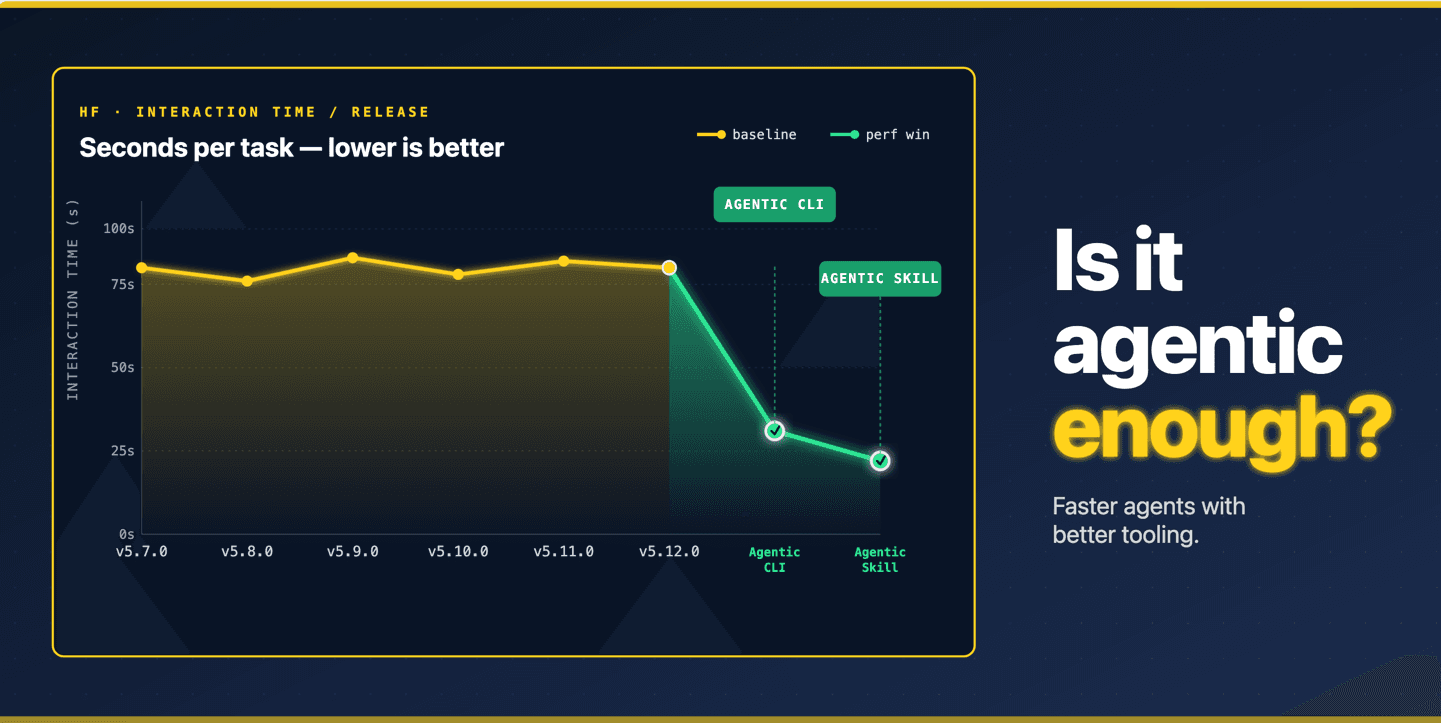
This leap in capability brings a critical new challenge: how do we truly know if these agents are "agentic enough"? How do we measure their effectiveness, reliability, and safety when they're operating autonomously within our specific systems and workflows? The answer lies in moving beyond generic benchmarks and embracing the power of benchmarking open models on your own tooling.
What Exactly is Agentic AI?
Agentic AI represents an advanced form of artificial intelligence focused on autonomous decision-making and action. Unlike traditional AI that primarily responds to commands or analyzes data, agentic AI can set its own goals, formulate plans, and execute tasks with little to no human intervention. It leverages LLMs as its "brain" to understand context, identify relevant information, and devise solutions, then uses external tools to interact with the world and achieve its objectives.
Think of it this way: an AI agent is an autonomous entity designed to perform specific tasks. Agentic AI, on the other hand, is the overarching system that coordinates and manages multiple such agents, enabling complex workflows. It's the difference between a single specialized tool and a coordinated team using a toolbox to build an entire house.
The core components that enable agentic AI to function are:
- Perception: Gathering information from its environment, whether through sensors, databases, APIs, or user interfaces.
- Reasoning: Utilizing an LLM to analyze gathered data, understand context, identify problems, and formulate potential solutions.
- Planning: Developing a sequence of steps to achieve a high-level goal, breaking it down into manageable actions.
- Action: Executing the planned steps, often by calling external tools, APIs, or interacting with other systems.
- Adaptability and Continuous Improvement: Learning from interactions, receiving feedback, and adjusting plans or decisions based on new information, allowing for continuous optimization.
This capability opens doors to a wide range of real-world applications. Agentic AI can empower customer service by managing inquiries from start to finish, optimize supply chains by predicting demand and automating logistics, assist in healthcare with diagnosis and treatment planning, and even accelerate software development by writing, testing, and debugging code.
Why Traditional Benchmarking Isn't Enough for Agentic AI
For years, the performance of LLMs has been measured using standardized public benchmarks like MMLU (Massive Multitask Language Understanding), HumanEval (for code generation), or HellaSwag. These benchmarks assess a model's broad knowledge, reasoning, and ability to generate correct outputs for static, single-turn tasks. While valuable for general comparisons, they often fall critically short when evaluating agentic AI, and here's why:
The Problem with Public Benchmarks:
- Test-Set Contamination: Many foundational models are trained on vast datasets scraped from the internet. This inevitably includes the very data used in public benchmarks, leading to inflated scores that reflect memorization rather than genuine reasoning or generalization. A model might appear intelligent on a public leaderboard but fail spectacularly on a slightly different, real-world task.
- Lack of Real-World Relevance: Public benchmarks are designed for general capabilities, not for your specific business logic, proprietary data, or unique operational environment. An agent performing well on a generic coding benchmark might struggle with your company's specific codebase, APIs, or internal tools.
- Static Output vs. Dynamic Process: Traditional evaluations often just check the final output. Agentic AI, however, is all about the process—the multi-step reasoning, tool orchestration, and dynamic interactions within an environment. A final correct answer might mask a highly inefficient process, incorrect tool calls, or even subtle hallucinations in intermediate steps.
- Non-Deterministic Behavior: Agentic systems often exhibit stochastic behavior, meaning their actions and outcomes can vary across different runs, even with identical inputs. This makes static, one-off evaluations less reliable for assessing consistent performance.
The Critical Need for Custom Benchmarking on Your Own Tooling
Given the limitations of general benchmarks, evaluating open models on your own tooling becomes not just beneficial, but essential for deploying reliable and effective AI agents. This approach means designing evaluation frameworks that specifically test how well an agent performs within your unique operational context, using your actual data, APIs, and workflows.
Why Custom Benchmarking Matters:
- Accurate Performance Prediction: Only custom benchmarks can accurately predict how an agent will behave in your specific production environment, with your proprietary data and constraints. This helps prevent costly deployment failures where highly-ranked foundational models regress or hallucinate when exposed to real business data.
- Domain-Specific Relevance: Your business has unique jargon, processes, and edge cases. Custom tooling ensures that your agent is evaluated against these specific requirements, guaranteeing its effectiveness in your niche.
- Evaluating the Entire Agent Trajectory: For agentic AI, the journey is as important as the destination. Custom benchmarks allow you to inspect the full execution path—which tools were called, with what parameters, how intermediate results were interpreted, and whether the overall plan was coherent and efficient.
- Identifying Subtle Failures: Issues like an agent calling the wrong API, passing incorrect arguments, or taking an unnecessarily long path to a solution can be invisible if you only check the final output. Custom evaluations, especially those with granular tracing, highlight these "below-the-surface" failures.
- Optimizing for Cost and Efficiency: In production, token usage, latency, and the number of steps an agent takes directly translate to operational costs and user experience. Custom benchmarks can track these metrics, helping you optimize for not just correctness, but also efficiency.
- Continuous Improvement and Regression Testing: As you iterate on your agents, models, prompts, or tools, a custom evaluation pipeline integrated into your CI/CD (Continuous Integration/Continuous Deployment) workflow ensures that new changes don't introduce regressions or unexpected behaviors.
Key Aspects of Custom Agentic Benchmarking
Building effective custom benchmarks for agentic AI involves a shift in focus and the adoption of new metrics and methodologies.
Metrics for Agentic AI: Beyond Simple Accuracy
While output quality remains important, agentic evaluations demand a broader set of metrics:
- Output Quality and Accuracy: Still vital, but often assessed in the context of the task and environment. For classification, a simple accuracy percentage works. For text generation, metrics like BLEU or ROUGE scores can compare output against a reference. For open-ended tasks, human or LLM-as-a-Judge rubrics are often used.
- Tool Selection Quality & Tool Call Accuracy: Did the agent choose the correct tool for the job? Were the parameters passed to the tool accurate and appropriate? This is crucial for agents interacting with external systems.
- Plan Quality & Adherence: Was the agent's multi-step plan logical and complete? Did the agent actually follow its own plan during execution?
- Step Efficiency: Did the agent complete the task without unnecessary steps, redundant tool calls, or inefficient reasoning loops? This directly impacts latency and token costs.
- Context Adherence & Faithfulness: Are the agent's responses and actions grounded in the data it accessed through its tools, or is it hallucinating information?
- Safety and Trustworthiness: Does the agent exhibit risky behaviors, misuse tools, or generate harmful content? This is especially critical for agents operating in sensitive domains.
Designing Your Custom Benchmarks:
A structured approach is key to building benchmarks that provide useful signals:
- Design the Dataset: This is the foundation. Collect a representative, labeled dataset of real inputs and scenarios your agent will encounter in production, not just invented examples.
- Define the Task: Clearly specify the prompt given to the agent, the expected output shape, and the environment it operates in, including available tools.
- Write the Scorer: Develop a method to turn the agent's output into a quantifiable score. This could be an exact string match, a regular expression check, an embedding similarity threshold, or an "LLM-as-a-Judge" system where another LLM evaluates the output against a rubric. Human annotation is also vital for validation.
- Establish Baselines: A raw score is meaningless without context. Benchmark your current production system or a simpler model to establish a baseline for comparison.
- Integrate into CI/CD: For ongoing reliability, automate your benchmarks to run on every significant code change, model update, or prompt revision. This enables continuous evaluation and rapid detection of regressions.
Open Models and Agent-Friendly Tooling:
The landscape of open-source LLMs is rapidly evolving, with models like Qwen, DeepSeek, GLM, Gemma, and Mistral becoming increasingly competitive for agentic tasks. However, their performance is significantly enhanced when used within a properly structured agent harness or framework.
Furthermore, the tools and libraries these agents interact with also need to be "agent-friendly." This means clear APIs, extensive and well-structured documentation, and discoverability, as clunky APIs or stale docs can lead agents down inefficient and costly paths.
Tools and Frameworks for Agentic Evaluation
Fortunately, a growing ecosystem of tools and frameworks is emerging to assist with agentic AI evaluation:
Dedicated Agent Evaluation Platforms:
- Galileo AI: Offers an "Agentic Evaluations" feature focusing on real-time observability, automated failure detection, and LLM-as-a-Judge metrics. It helps analyze complete execution trajectories, including tool selection logic and plan quality.
- Arize AI (Arize AX): Extends ML observability to LLM agents with granular tracing (using OpenTelemetry standards), purpose-built evaluators for RAG and agentic workflows, and automated drift detection. It supports LLM-as-a-Judge and human annotation.
- Confident AI (DeepEval): An open-source LLM evaluation framework (DeepEval is the core library, Confident AI is the cloud platform) that functions like Pytest for LLM apps. It provides over 40 LLM-as-a-Judge metrics, supports component-level evaluation, real-time tracing, and integrates with popular frameworks like LangChain, OpenAI Agents, and CrewAI. DeepEval also allows users to build custom metrics.
- Langfuse: An open-source LLM engineering platform that emphasizes granular cost attribution and comprehensive trace analysis. It offers trace and span tracking for nested workflows and custom evaluation metrics with flexible scoring functions.
- Evidently AI: An open-source library for ML and LLM testing, providing evaluation reports and data drift detection. While general, its framework can be used for agent evaluation, though agent-specific metrics might require custom building on top.
- AWS Agent-EvalKit: An open-source toolkit (Apache 2.0) that integrates with AI coding assistants. It helps define evaluation goals in natural language, generates targeted test cases, and assesses metrics like faithfulness, tool parameter accuracy, and response quality by tracing the agent's full execution path.
Agent Building Frameworks with Evaluation Support:
Many frameworks used to build AI agents also offer features or integrations for evaluation:
- LangChain/LangGraph: Widely used for constructing complex agentic workflows. LangGraph, specifically, focuses on building controllable, stateful agents. Both integrate well with evaluation tools like LangSmith and DeepEval.
- AutoGen (Microsoft): A multi-agent conversation framework that facilitates complex interactions between AI agents. It has shown to outperform single-agent solutions on benchmarks like GAIA.
- OpenAI Agents SDK: A lightweight Python framework for creating multi-agent workflows, including tracing and guardrails, and is compatible with numerous LLMs.
The Path Forward: Ensuring Agentic Excellence
The shift towards agentic AI is more than just a technological upgrade; it's a fundamental change in how we conceive and deploy AI systems. For AI practitioners and developers, understanding and implementing robust evaluation strategies for these autonomous entities is paramount. Relying solely on general public benchmarks is a risky strategy that can lead to misinformed decisions and costly failures in production.
Instead, the focus must be on creating tailored, domain-specific benchmarks that operate on your own tooling. By rigorously evaluating open models against your unique requirements, tracking granular metrics beyond just final output, and integrating continuous evaluation into your development lifecycle, you can confidently build and deploy AI agents that are truly "agentic enough" for your specific needs—efficient, reliable, and safe.
This commitment to custom, in-depth benchmarking will not only ensure the success of individual agentic projects but also contribute to the responsible and effective advancement of AI as a whole. The future of AI is agentic, and the future of agentic AI depends on robust evaluation.
Frequently Asked Questions
What is the main difference between traditional LLM benchmarking and agentic AI benchmarking?
Traditional LLM benchmarking typically evaluates static output quality for single-turn tasks, like answering a question or generating a piece of text. Agentic AI benchmarking, however, focuses on evaluating the entire multi-step process an agent undertakes, including its planning, reasoning, tool use, and adaptability in dynamic environments. It assesses not just the final result, but also how efficiently and correctly the agent reached that result.
Why can't I just rely on public benchmarks for my agentic AI project?
Public benchmarks, while useful for general comparisons, often suffer from test-set contamination (models may have seen the answers during training) and lack relevance to specific, proprietary business contexts. They don't account for your unique data, internal tools, or operational constraints, leading to unreliable performance predictions for your real-world agentic AI applications.
What kind of metrics are important when evaluating an AI agent on custom tooling?
Beyond basic output accuracy, key metrics for agentic AI evaluation include tool selection quality, tool call accuracy (correct parameters), plan quality and adherence, step efficiency (minimizing unnecessary actions and token usage), context adherence (avoiding hallucinations), and overall safety and trustworthiness.
Are there open-source tools to help with agentic AI evaluation?
Yes, several open-source tools and frameworks can assist with agentic AI evaluation. DeepEval (from Confident AI) is a prominent open-source LLM evaluation framework with agent-specific metrics and integrations. Langfuse also offers open-source tracing and custom evaluation capabilities. Additionally, AWS Agent-EvalKit is an open-source toolkit for evaluating agent execution paths. Frameworks like LangGraph and AutoGen, while primarily for building agents, also incorporate features that support robust evaluation.